

Epinephrine Dosage Calculator
Calculate Your Epinephrine Dose
Based on weight, this tool shows which epinephrine auto-injector dose you should carry for severe allergic reactions.
Dose Information
Enter your weight to see which epinephrine dose you need
Important safety information:
- Always check the label on your device before use
- Epinephrine is the only medication that can stop anaphylaxis
- Antihistamines like Benadryl do not prevent or treat anaphylaxis
- Keep two epinephrine injectors at all times
- Replace epinephrine before expiration date
Carrying the right medications for an allergic reaction isn’t just a good idea-it’s a life-saving habit. If you or someone you care for has severe allergies, knowing what to carry and when to use it can make the difference between a scary moment and a tragedy. An Allergy Action Plan isn’t a suggestion. It’s a medical roadmap, created by your doctor, that tells you exactly what to do when symptoms start. And the most critical part? Knowing that epinephrine is the only medication that can stop a life-threatening reaction-and it must come first.
Epinephrine: The One Medication That Saves Lives
Epinephrine is not optional. It’s the only treatment that reverses the dangerous drop in blood pressure, opens swollen airways, and stops the body’s runaway immune response during anaphylaxis. Antihistamines like Benadryl? They help with itching or hives-but they do nothing to stop breathing failure or shock. Delaying epinephrine to give an antihistamine first is one of the most common mistakes in allergic emergencies.
Epinephrine auto-injectors come in three standard doses: 0.10 mg for children 16-28 pounds, 0.15 mg for 29-55 pounds, and 0.30 mg for anyone over 55 pounds. These are not guesses. They’re based on weight and body size, and using the wrong dose can be ineffective or dangerous. Always check the label on your device. If your child has grown, talk to your doctor about upgrading the dose. Outdated or expired epinephrine is a silent risk-32% of households in a 2023 FARE survey had at least one expired injector. Replace them before the date printed on the side. Keep two on hand at all times. Biphasic reactions, where symptoms return hours later, happen in 1 in 5 cases.
When to Use Epinephrine: Don’t Wait for the Worst
You don’t need to see every symptom to act. The rule is simple: if a known allergen was eaten, touched, or inhaled, and there’s any sign of a reaction involving more than one body system, use epinephrine immediately. That means hives and vomiting. Or coughing and dizziness. Or swelling of the lips and trouble breathing.
For kids under 3, watch for sudden hives, persistent cough, or unusual lethargy. Older children and adults should be alert for throat tightness, wheezing, feeling faint, or a sense of doom. The American Academy of Pediatrics says: “Give epinephrine at the first sign of a severe reaction.” Don’t wait for vomiting or collapse. If you’ve had anaphylaxis before-even once-or if you have asthma, your risk is higher. Err on the side of giving epinephrine. Studies show that giving it within five minutes cuts death risk by 94%. Waiting 10 minutes or more? That’s when fatalities spike.
There’s one exception: if the reaction is mild-just a few hives or mild swelling with no breathing or stomach trouble-you can watch closely and give an antihistamine if your doctor says so. But if symptoms change or worsen in the next 10-15 minutes, give epinephrine right away. Don’t hesitate. Don’t call the school nurse first. Don’t drive to the ER before injecting. Inject, then call 911.
Other Medications: What to Carry and What Not to Rely On
Alongside epinephrine, most action plans list a second medication: an antihistamine like diphenhydramine (Benadryl). This is for mild reactions only. The dose is 1 mg per kilogram of body weight, up to a max of 50 mg. For a 50-pound child, that’s about 25 mg. Always use the liquid form for kids-it’s easier to measure. Tablets are fine for adults.
Some people also carry an albuterol inhaler. This helps if wheezing develops from an allergic reaction, especially if asthma is part of the picture. But again: epinephrine comes first. If someone is wheezing and has a known allergen exposure, give epinephrine, then use the inhaler if symptoms don’t improve.
Never use antihistamines as a substitute. A 2021 study showed that in schools, giving Benadryl before epinephrine delayed the life-saving shot by an average of 22 minutes. That delay cost lives. Epinephrine doesn’t just treat symptoms-it stops the reaction from killing you. Antihistamines just make you feel less itchy.
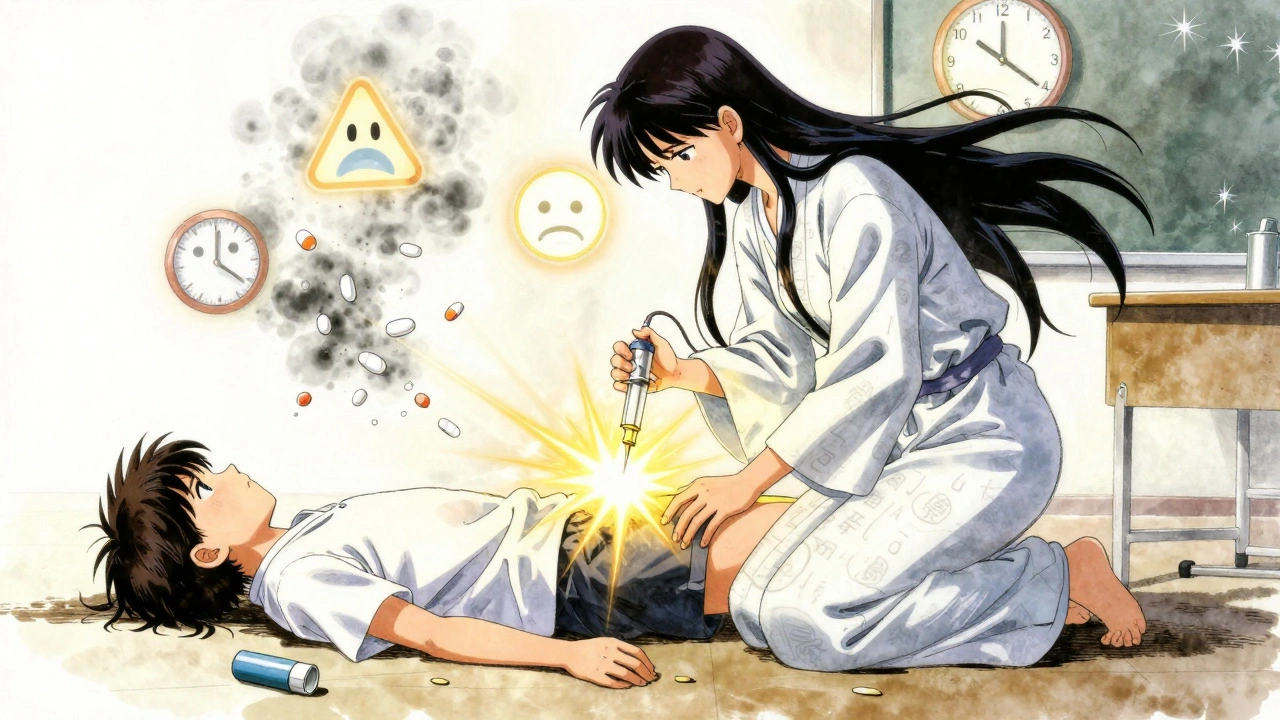
What to Do After Giving Epinephrine
Injecting epinephrine isn’t the end-it’s the beginning of emergency care. After you give the shot:
- Call 911 immediately. Even if the person seems better.
- Have them lie down with legs raised, unless they’re having trouble breathing-in which case, let them sit up.
- Keep the used injector. Paramedics will need to know what was given and when.
- Be ready to give a second dose. If symptoms return or don’t improve after 5-10 minutes, give another injection. The same dose. No need to wait longer.
- Go to the ER. Even if you feel fine. You need to be monitored for at least 4-6 hours. Biphasic reactions can strike without warning.
Many people think they’re “fine” after the first shot. That’s dangerous. The body’s reaction can flare up again, hours later, even without more exposure. That’s why ER observation is non-negotiable.
How to Make Sure Your Plan Works
A written plan on paper doesn’t help if no one knows how to use it. Share your plan with:
- School staff (teachers, nurses, bus drivers)
- Daycare providers
- Coaches and after-school program leaders
- Family members who watch your child
- Anyone who might be alone with you or your child during meals or outings
Don’t assume they’ve read it. Walk them through it. Show them the auto-injector. Practice on a trainer device (they’re free from manufacturers). Ask them to repeat back the steps. In a 2023 study, only 38% of teachers could correctly identify anaphylaxis symptoms without a visual guide. If your child’s school doesn’t have a nurse, make sure someone is trained. Many states now require individualized health plans for students with allergies.
Keep your plan visible. Tape a copy to the fridge. Put one in your wallet. Save a digital copy on your phone. FARE’s mobile app, launched in March 2024, lets you store your plan, set reminders for injector replacements, and even send alerts to emergency contacts with your location. Over 142,000 people are already using it.

Common Mistakes and How to Avoid Them
Here’s what goes wrong-and how to fix it:
- Mistake: Using an expired injector. Fix: Set a phone reminder 3 months before expiration. Replace it immediately.
- Mistake: Thinking antihistamines prevent anaphylaxis. Fix: Remember: epinephrine only. No exceptions.
- Mistake: Not carrying two injectors. Fix: Always have a backup. Keep one at home, one at school, one in your purse or bag.
- Mistake: Waiting to see if symptoms get worse. Fix: If there’s any doubt, inject. It’s safer than waiting.
- Mistake: Not updating the plan after a reaction. Fix: After any anaphylaxis episode, schedule a follow-up with your allergist. Your plan may need to change.
One parent on Reddit shared that her son had a reaction at camp and the counselor gave him Benadryl first because she didn’t know what epinephrine looked like. He ended up in the ICU. That’s not rare. That’s preventable.
Final Rule: Trust the Plan, Not Your Gut
When you’re scared, your brain wants to wait. To see. To hope it’s not that bad. But allergic reactions don’t wait. They move fast. Your plan was written by a doctor who knows your history. It’s not a suggestion. It’s your safety net.
If you’ve been told to carry epinephrine, carry it. Every day. In every bag. In every car. In every backpack. Don’t leave it at home because “it’s just a snack.” Don’t leave it in the car because “it’s too cold.” Epinephrine doesn’t care about convenience. It cares about timing.
And if you’re the one helping someone else-whether it’s your child, a student, or a friend-remember: you don’t need to be a doctor. You just need to know one thing: when in doubt, inject.
Can I use an antihistamine instead of epinephrine for a mild allergy reaction?
Only if the reaction is truly mild-like a few hives or mild swelling with no breathing, stomach, or dizziness symptoms. Even then, you must watch closely. If symptoms spread to another part of the body (like coughing or vomiting), give epinephrine right away. Antihistamines do not stop anaphylaxis. Never use them as a replacement.
How do I know which epinephrine dose to use?
Dose is based on weight: 0.10 mg for 16-28 lbs, 0.15 mg for 29-55 lbs, and 0.30 mg for 55+ lbs. Check the label on your auto-injector. If your child has gained weight or grown significantly, talk to your allergist about upgrading. Never use a higher dose than prescribed unless instructed by emergency staff.
What if I’m not sure it’s an allergic reaction?
If a known allergen was involved and there’s any sign of a reaction-even one symptom like hives or coughing-give epinephrine. It’s safer to give it when it’s not needed than to wait and risk missing the window. Epinephrine is safe for most people, even if they don’t have a severe allergy. Side effects like a racing heart are temporary and far less dangerous than untreated anaphylaxis.
Can I reuse an epinephrine auto-injector?
No. Auto-injectors are single-use devices. Even if you only pressed the plunger partway or didn’t see a needle, the medication may have been released. Always replace it after use. Keep a second injector available for a possible second dose or if the first fails.
Is there a new way to give epinephrine besides an injection?
Yes. In 2023, the FDA approved Neffy, a nasal spray form of epinephrine. It’s approved for people weighing 75 pounds or more. It’s not a replacement for injectable epinephrine in all cases-especially for young children or severe reactions-but it’s an option for some. Check with your doctor to see if it’s right for you. Most action plans still list injectable epinephrine as the primary treatment.


