
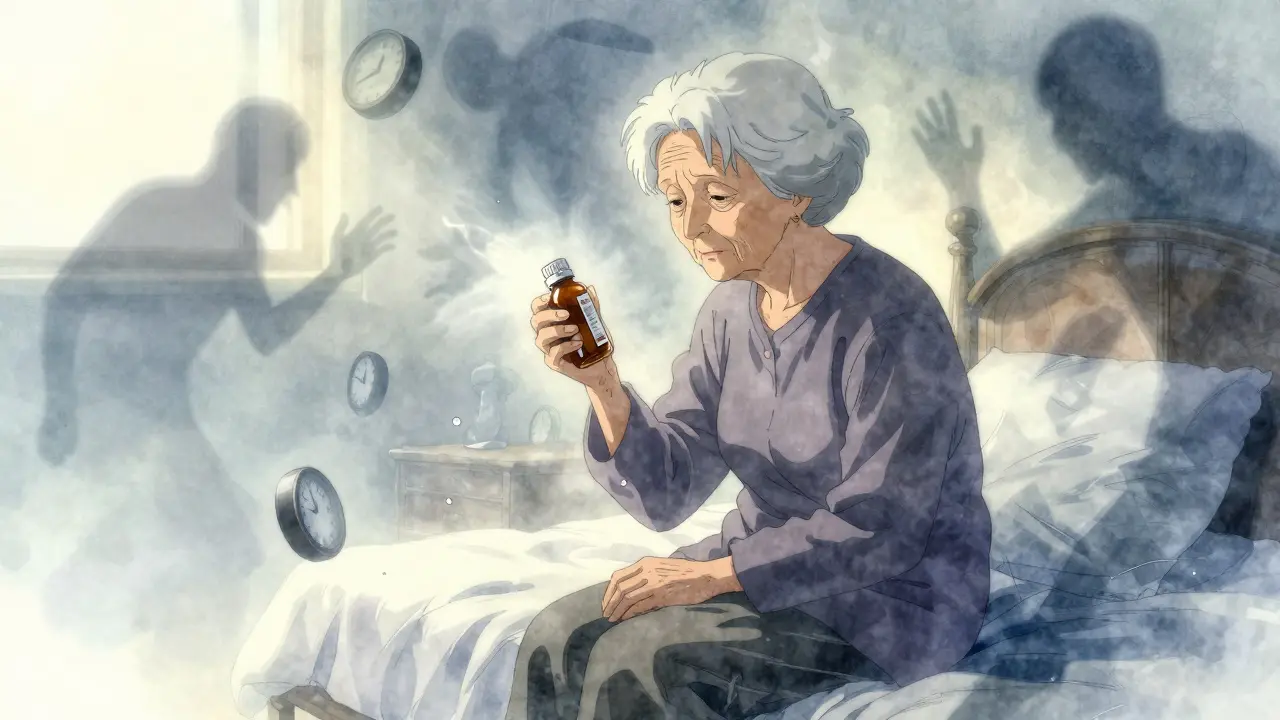
Every year, millions of older adults in the U.S. are prescribed benzodiazepines for anxiety, insomnia, or panic attacks. Drugs like Valium, Xanax, and Ativan seem like quick fixes - fast-acting, effective, and familiar. But for seniors, these medications carry hidden dangers that many doctors and patients still don’t fully understand. The truth? What works for a 40-year-old can be dangerous for a 75-year-old. And the risks aren’t just side effects - they’re life-altering.
Why Benzodiazepines Are Riskier for Seniors
It’s not that benzodiazepines don’t work. They do. They calm nerves, help people sleep, and stop panic attacks in minutes. But aging changes how the body handles drugs. Older adults process these medications slower. Their livers don’t break them down as efficiently. Their brains become more sensitive to their effects. This means even small doses can lead to big problems.
The American Geriatrics Society’s Beers Criteria - the gold standard for safe prescribing in older adults - has listed benzodiazepines as potentially inappropriate for seniors since 2015. The 2024 update made it even clearer: all benzodiazepines, no matter how short-acting, are risky. Why? Because the damage adds up.
Studies show seniors on these drugs have a 50% higher chance of falling and breaking a hip. One study of over 43,000 people found that those taking benzodiazepines were more likely to end up in the ER after a fall. The risk of a car crash? Equivalent to driving with a blood alcohol level of 0.05% to 0.079% - that’s legally impaired in most states.
And it’s not just falls. Long-term use is linked to memory loss, confusion, and even dementia. A 2023 meta-analysis found that seniors who took benzodiazepines for more than six months had an 84% higher risk of developing Alzheimer’s disease. The longer the use, the higher the risk. And here’s the kicker: cognitive decline doesn’t always reverse after stopping. Some people never fully get their memory back.
The Hidden Cost of Short-Term Use
Many doctors justify benzodiazepine use by saying, “I’m only prescribing it for a few weeks.” But that’s often not what happens. A 2023 analysis found that 31% of seniors prescribed benzodiazepines are still taking them a year later. Why? Because stopping is hard.
Rebound anxiety and insomnia are real. When the drug leaves the system, the original symptoms often come back worse. That’s when patients ask for refills. And refills turn into months, then years. The American Society of Addiction Medicine says withdrawal symptoms occur in 60-80% of elderly patients trying to quit. That means shaking, sweating, panic attacks, and even seizures.
Even worse, many seniors don’t realize they’re at risk. A 2015 study found only 41% knew benzodiazepines increased fall risk. Only 28% knew they could worsen depression. And 85% of seniors on these drugs say they feel “foggy” all the time - but they think it’s just getting older.

What Are the Safer Alternatives?
The good news? There are better options. And they work - without the danger.
Cognitive Behavioral Therapy for Insomnia (CBT-I) is the most effective treatment for chronic sleep problems in older adults. Studies show 70-80% of seniors improve with CBT-I, and the benefits last. Unlike pills, it doesn’t wear off. It doesn’t cause dependence. Medicare now covers CBT-I under its Behavioral Health Integration benefit, but only 12% of eligible seniors use it - mostly because providers don’t know how to refer them.
SSRIs and SNRIs like sertraline (Zoloft) or venlafaxine (Effexor) are first-line treatments for anxiety in seniors. They take 4-6 weeks to work, but they’re safer long-term. They don’t cause dizziness, memory loss, or falls. They’re also less likely to interact dangerously with other medications.
Ramelteon (a melatonin receptor agonist) is a non-addictive sleep aid approved for seniors. It helps with falling asleep, though it doesn’t fix sleep maintenance as well as CBT-I. It’s far safer than benzodiazepines or even over-the-counter sleep aids like diphenhydramine (Benadryl), which have strong anticholinergic effects that raise dementia risk.
For acute panic attacks, non-drug techniques like slow breathing, grounding exercises, or mindfulness can be taught in a few sessions. They’re not instant, but they’re sustainable. And they don’t leave a trail of cognitive damage behind.
How to Stop Safely - If You’re Already on Them
If you or a loved one has been on a benzodiazepine for months or years, don’t quit cold turkey. That’s dangerous. Withdrawal can trigger seizures, hallucinations, or extreme anxiety.
The best approach? A slow, supervised taper. The American Society of Addiction Medicine recommends reducing the dose by 5-10% every 1-2 weeks. For some seniors, that means a 6-12 month process. It’s slow, but it works.
Pair the taper with CBT. Studies show that when seniors get therapy while tapering, 65% successfully stop the drug. Without therapy, only 35% make it. That’s a huge difference.
Also, involve caregivers. Family members often resist stopping because they remember when the drug helped. But they need to know: the short-term comfort isn’t worth long-term risk. A 2024 study found that 30% of tapering attempts failed because caregivers pushed back.
Ask your doctor for a written taper plan. Use a pill cutter or a compounding pharmacy to get smaller doses. Keep a journal: note mood, sleep, energy, and any withdrawal symptoms. That helps your provider adjust the plan.

Why This Problem Persists
Prescriptions for benzodiazepines in seniors have dropped 18% since 2015. That’s progress. But 3.2 million elderly Americans are still on them. Why?
One reason: inertia. Doctors don’t always update their knowledge. A 2023 survey found that 40% of primary care providers still believed short-term use was low-risk. Another reason: lack of alternatives. Many clinics don’t have access to therapists trained in CBT-I. Rural areas have even fewer resources.
And then there’s the culture. Seniors are told, “Take this for sleep,” and they do. No one tells them about the dementia risk. No one asks if they’ve tried therapy first.
Medicare’s Drug Utilization Review now flags inappropriate prescriptions. The FDA now requires black box warnings on all benzodiazepine labels about dementia risk. The NIH is funding a five-year study called BRIGHT to test telehealth-based deprescribing. These are steps forward.
But real change happens one patient at a time. When a doctor says, “Let’s try something safer,” and follows through - that’s when lives improve.
What You Can Do Today
- If you’re on a benzodiazepine: Don’t stop suddenly. Talk to your doctor about a taper plan.
- Ask if CBT-I is covered by your insurance. Many Medicare Advantage plans now offer it.
- Bring a family member to appointments. They can help remember risks and ask questions.
- Check your medication list. If you’re on more than one sedative (even OTC sleep aids), ask if they’re necessary.
- Use the Benzodiazepine Information Coalition’s free online resources - they have guides, support groups, and tapering tools.
There’s no shame in needing help with sleep or anxiety. But there’s real danger in using the wrong tool for the job. For seniors, benzodiazepines are a relic - a quick fix with long-term costs. The safer alternatives exist. They’re proven. And they’re worth fighting for.
Are benzodiazepines ever safe for elderly patients?
Benzodiazepines are rarely appropriate for seniors. The American Geriatrics Society recommends avoiding them except in rare cases - like severe, treatment-resistant anxiety or during short-term medical procedures. Even then, they should be used for the shortest time possible. Long-term use for insomnia or general anxiety is not considered safe. For most older adults, the risks of falls, cognitive decline, and dependency far outweigh any short-term benefit.
How long does it take to safely stop taking benzodiazepines?
For most elderly patients, tapering takes 8 to 16 weeks, with dose reductions of 5-10% every 1-2 weeks. Some people, especially those on high doses or long-acting drugs like diazepam, may need 6 to 12 months. The key is slow, steady, and monitored. Going too fast can trigger withdrawal symptoms like seizures, panic attacks, or rebound insomnia. Always work with a doctor who understands geriatric tapering protocols.
Can I switch from a benzodiazepine to melatonin or Benadryl?
No. Melatonin (like ramelteon) is a safer alternative for sleep onset, but it doesn’t fix sleep maintenance or anxiety. Benadryl (diphenhydramine) is even riskier - it’s an anticholinergic drug linked to increased dementia risk in seniors. Neither replaces the need for a proper taper or behavioral therapy. The goal isn’t to swap one drug for another - it’s to move away from all sedatives and toward non-drug treatments like CBT-I.
Why don’t doctors just stop prescribing these drugs?
Many doctors still believe benzodiazepines are low-risk for short-term use. Some don’t know about the Beers Criteria or the dementia link. Others lack access to behavioral health providers who can offer CBT-I. And patients often ask for refills because they feel better - not realizing the long-term damage. Changing prescribing habits takes time, education, and system-wide support - which is slowly improving.
Is it too late to stop if I’ve been on benzodiazepines for years?
It’s never too late. Even seniors who’ve been on these drugs for 10 or 20 years have successfully tapered with proper support. Recovery may take longer, and withdrawal symptoms can be more intense, but the benefits - improved balance, clearer thinking, fewer falls - are worth it. The key is having a plan, medical supervision, and emotional support. Many people report feeling more alert and alive after stopping.


