
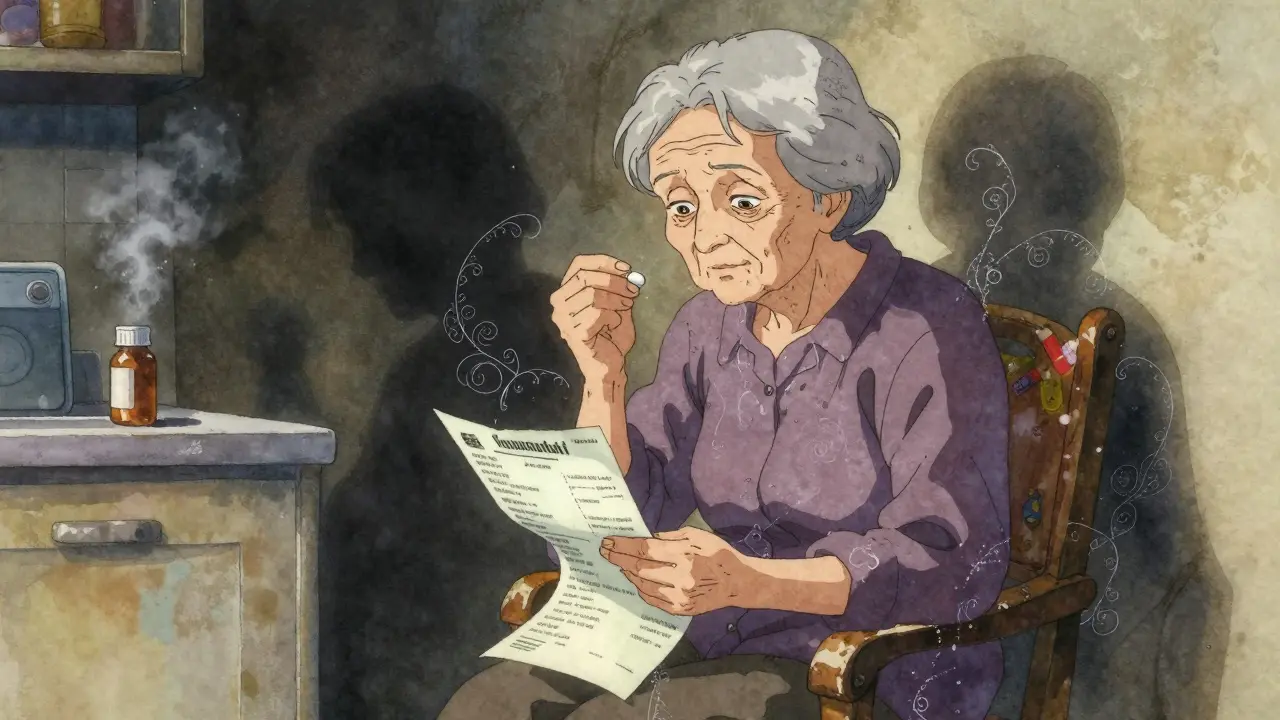
More than 1 in 5 Americans skip, cut, or delay their prescriptions because they can't afford them. It's not just about being careful with money-it's about survival. Imagine taking insulin every day but only using half your dose because the $500 monthly bill means choosing between medicine and groceries. This isn't rare. It's happening to millions. And the consequences? Medication adherence isn't just a medical term-it's a lifeline. When people can't pay, they die.
Why Cost Stops People From Taking Their Medicine
The numbers don't lie. According to the CDC, 8.2% of adults under 65 didn't take their meds as prescribed last year because of cost. That’s over 16 million people. For older adults on Medicare, 14.4% reported skipping doses due to price. These aren't just statistics-they're real lives. A 62-year-old woman in Ohio told Kaiser Health News she pays $350 a month for her meds after Medicare Part D. She cuts pills in half. She skips days. She chooses between her heart medicine and her heating bill. It’s not just about high prices. It’s how the system is built. Copays, deductibles, coinsurance, tiered formularies-all of it adds up. A study in the American Journal of Managed Care found that when a copay jumped from $10 to over $50, adherence dropped by 15-20%. That’s a huge swing. And it’s worse for chronic conditions. People with heart disease, diabetes, or high blood pressure are hit hardest because they need meds every single day. No breaks. No pauses. Even with insurance, many still face sticker shock at the pharmacy. One Reddit user shared they pay $800 a month for insulin despite having coverage. That’s not a mistake. That’s the system.Who Gets Hit the Hardest?
Cost-related nonadherence doesn’t affect everyone equally. Low-income households, Black and Hispanic communities, women, and younger adults are far more likely to skip meds because of price. A CDC study found that people making under $25,000 a year are over three times more likely to skip doses than those making over $75,000. Why? Because when your paycheck barely covers rent and food, medicine becomes a luxury. One in four Americans say they’ve chosen between medicine and food. One in five say they’ve skipped meds to pay for utilities or rent. And it’s not just about income. It’s about what you’re taking. Cardiovascular drugs show the strongest link between cost and nonadherence. Diabetes meds? Same story. Cancer treatments? Often too expensive to even try. Meanwhile, some medications-like generic blood pressure pills-cost under $5 a month. But if your doctor prescribes a brand-name version without checking your insurance, you’re stuck with a $300 bill.What Can You Do Right Now?
You don’t have to accept this. There are real, working solutions-and you don’t need to be an expert to use them.- Ask your doctor about formularies. Before they write your script, ask: "Is this on my insurance’s lowest-cost tier?" If not, ask for an alternative. Many doctors don’t know what their patients pay. They assume insurance covers it. They’re wrong.
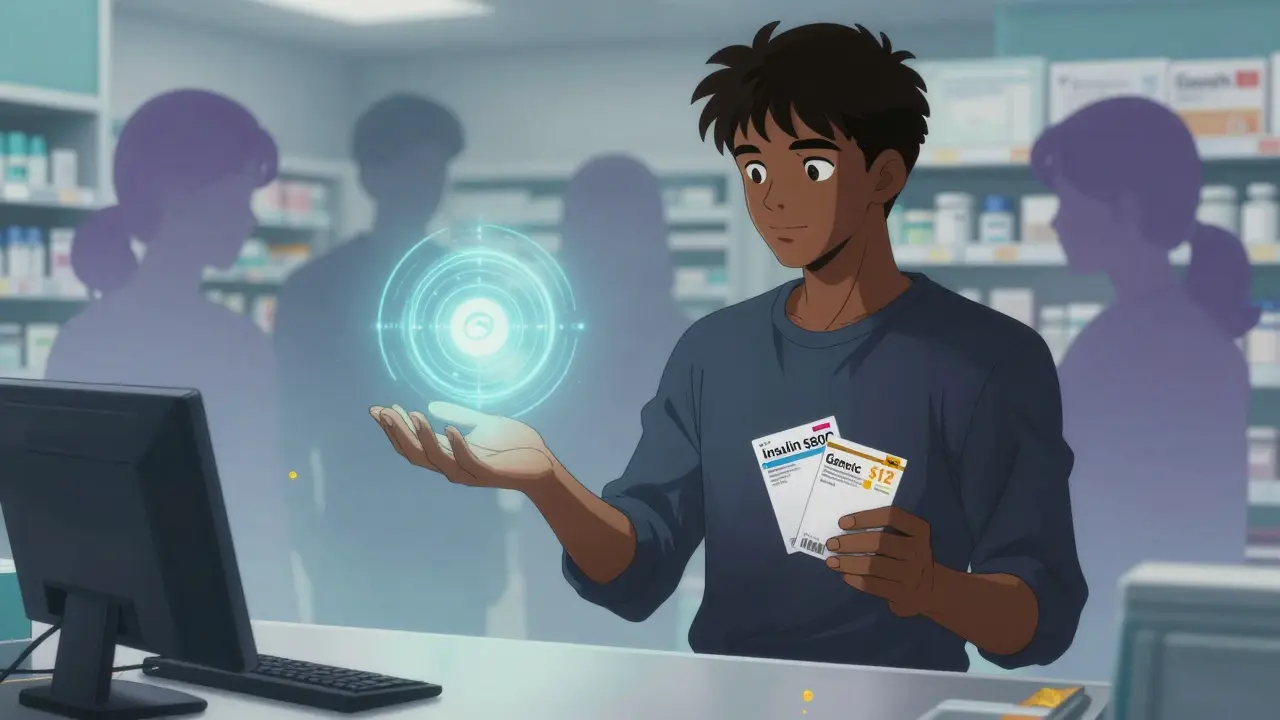
- Use GoodRx or SingleCare. These free apps show you the lowest cash price at pharmacies near you. Sometimes, the cash price is cheaper than your insurance copay. One man saved $220 a month on his cholesterol drug by switching to a cash price of $12 instead of his $232 copay.
- Ask for 90-day supplies. Many insurers charge the same copay for 30 or 90 days. That means you pay once every three months instead of three times a month. You save money and reduce trips to the pharmacy.
- Check for patient assistance programs. Pharmaceutical companies run these programs to help people who can’t afford their meds. Eligibility is often based on income below 400% of the federal poverty level ($55,520 for one person in 2023). Some programs cut costs by 95%. A type 2 diabetes patient went from $500/month for insulin to $25 after enrolling.
- Use the Partnership for Prescription Assistance. This nonprofit connects you to over 470 programs. Just call or go online. They handle the paperwork.
Medicare and the New Rules Starting in 2025
The Inflation Reduction Act changed everything for Medicare beneficiaries. Starting in 2024, the "donut hole"-that gap where you pay full price after hitting a spending threshold-is gone. In 2025, your out-of-pocket spending on prescriptions will be capped at $2,000 a year. That’s huge. No more $10,000 insulin bills. There’s also a new monthly payment plan called M3P. If you’re on Medicare and take a high-cost drug, you can split your annual cost into 12 equal payments. No more $1,500 lump sums in January. This alone could prevent thousands of people from skipping doses. And if your income is low, Extra Help (also called the Low-Income Subsidy) can cover up to $5,000 in drug costs each year. You don’t have to be poor to qualify. Many middle-income seniors don’t even know this exists.What About Generic Drugs?
In 2022, the FDA approved over 1,100 new generic drugs. That’s more competition. More competition means lower prices. If your doctor prescribes a brand-name drug, ask: "Is there a generic?" For example, the brand-name version of Lipitor (atorvastatin) costs $200+. The generic? $10. Same drug. Same effect. Just cheaper. Some medications don’t have generics yet-but that’s changing fast. New biosimilars for insulin, arthritis drugs, and biologics are hitting the market. Ask your pharmacist: "Is there a lower-cost version available?" They know the prices better than your doctor.
Real Stories. Real Results.
One woman in Texas had her blood pressure meds cut in half because she couldn’t afford them. Her doctor didn’t know. She ended up in the ER with a stroke. After she recovered, she enrolled in a patient assistance program. Her monthly cost dropped from $420 to $15. Her BP stabilized. She’s back to work. Another man in Florida paid $900 a month for his diabetes meds. He called GoodRx. Found a pharmacy that sold the same insulin for $25. He’s now taking his full dose. His A1C dropped from 9.8 to 6.7. These aren’t miracles. They’re choices. Choices you can make too.What’s Still Broken?
Even with all the tools available, the system is still unfair. Real-time benefit tools-apps that show drug prices at the point of care-are supposed to help doctors prescribe cheaper options. But a 2022 study found that 37% of the prices these tools showed were off by more than $10. That’s dangerous. If your doctor thinks your copay is $15, but you pay $45, you’re set up to fail. And while the $2,000 cap sounds great, it doesn’t help people under 65. Most Americans under Medicare age still face unlimited out-of-pocket costs. Insulin is still $100+ a vial for many. Mental health meds? Often $100+ a month. And pharmacies? Some still refuse to honor GoodRx discounts. The big picture? Drug prices in the U.S. are 2-3 times higher than in other wealthy countries. That’s not a coincidence. It’s policy. And until we fix pricing at the source, these workarounds will only help so many.Final Thought: Talk About It
The most powerful tool you have? Your voice. Tell your doctor you can’t afford your meds. Ask your pharmacist for help. Call a patient advocacy group. You’re not alone. Over 1.8 million Americans got help through manufacturer programs last year. You can be next. Don’t wait until you’re sick. Don’t wait until you’re in crisis. Ask now. Research now. Act now. Your life depends on it.What should I do if I can’t afford my prescription?
First, talk to your doctor. Ask if there’s a generic or lower-cost alternative. Then check GoodRx or SingleCare for cash prices-sometimes they’re cheaper than your insurance copay. Look into patient assistance programs from the drug manufacturer. You can also ask your pharmacist about 90-day supplies or mail-order options. If you’re on Medicare, check if you qualify for Extra Help.
Can I really save money using GoodRx?
Yes. GoodRx and SingleCare negotiate cash prices with pharmacies. In many cases, the cash price is lower than your insurance copay, especially for brand-name drugs or if you have a high-deductible plan. One user saved $220 a month on a cholesterol drug by switching from a $232 copay to a $12 cash price. These tools are free and work at over 65,000 pharmacies.
Do patient assistance programs really work?
Absolutely. In 2022, pharmaceutical companies helped 1.8 million Americans get their meds for free or at low cost. Programs typically require proof of income below 400% of the federal poverty level ($55,520 for one person). Some cut costs by 90-95%. For example, insulin costs dropped from $500 to $25 for one patient after enrollment. The Partnership for Prescription Assistance can help you find the right program.
Is Medicare Part D enough to cover my drug costs?
Not always. Before 2024, many Medicare beneficiaries hit the "donut hole" and paid full price. Now, the donut hole is gone, and out-of-pocket spending is capped at $2,000 per year starting in 2025. But if you’re still paying hundreds a month, you may qualify for Extra Help-a program that covers up to $5,000 in annual drug costs for low-income beneficiaries. Don’t assume you’re covered-check your eligibility.
Why do some pharmacies refuse GoodRx discounts?
Some pharmacies, especially independent ones, don’t participate in GoodRx’s network. Chain pharmacies like CVS, Walgreens, and Walmart almost always do. Always call ahead. If a pharmacy refuses, ask if they’ll match the price. Some will, especially if you’re paying cash. If they won’t, try another location using the GoodRx app-it shows which stores accept the discount.


