

Emotional Blunting vs. Residual Depression Checker
Answer the following questions based on your current experience to help identify patterns you can discuss with your doctor.
Analysis Result:
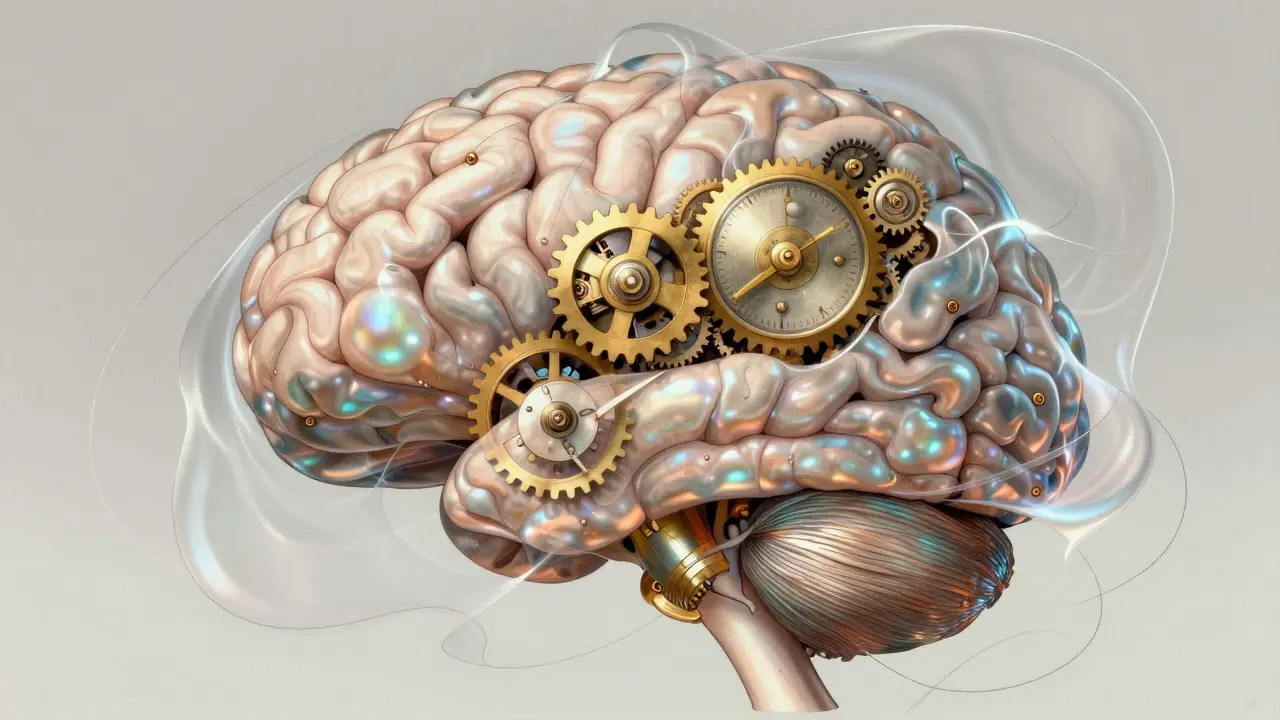
You started taking an antidepressant to stop feeling the crushing weight of depression, but now you've landed in a strange middle ground. You aren't necessarily "sad" anymore, but you aren't happy either. You can't cry at a funeral, you don't feel that spark of joy when your kids laugh, and your sex drive has vanished. It feels like someone turned the volume down on your entire life. This is emotional blunting is a reduction in the ability to experience both positive and negative emotions, often described as a state of emotional numbness or detachment.
If this sounds familiar, you aren't imagining it. It's a documented side effect of many common medications. While these drugs are designed to lift you out of a dark hole, they can sometimes build a wall between you and the rest of the world. The goal isn't just to "not be depressed," but to feel like a human being again.
The Quick Takeaways
- What it is: A "flat" emotional state where both peaks (joy) and valleys (sadness) are muted.
- Who gets it: Estimates vary, but some research suggests 40-60% of people on SSRIs/SNRIs experience this.
- The Cause: It likely interferes with "reinforcement learning"-how your brain processes rewards and emotions.
- The Solution: Options include dose adjustment, switching medications, or adding a secondary drug like bupropion.
- Warning: Never change your dose or stop these meds without a doctor's supervision.
Is it the Medication or the Depression?
One of the hardest parts of dealing with this is figuring out if the numbness is a side effect of the pill or a "residual symptom" of the depression itself. Many people with Major Depressive Disorder experience anhedonia-the inability to feel pleasure-long before they start medication. This creates a confusing overlap.
However, there's a key difference. If you felt your emotions returning as the depression lifted, but then hit a "ceiling" where you couldn't feel anything more intensely, it's more likely the medication. Doctors often look for signs of "hot cognition" impairment. While your "cold cognition" (memory, logic, and reasoning) remains sharp, your "hot cognition" (emotional decision-making and moral judgment) feels sluggish or muted. If you find yourself unable to react emotionally to a situation that used to make you furious or ecstatic, the medication is the likely culprit.
Why Your Brain Feels "Flat"
For years, we thought this was just a vague side effect. But recent work from the University of Cambridge has provided a more concrete explanation. Researchers found that SSRIs (Selective Serotonin Reuptake Inhibitors) can interfere with reinforcement learning. This is the behavioral process that allows us to learn from our environment by associating actions with emotional rewards.
When this process is dampened, you lose the "emotional signal" that tells you something is great or terrible. It’s why a user on Reddit described it as a "flat nothing"-they could see their dog was happy to see them, but the internal feeling of joy simply didn't trigger. This doesn't mean you're "cured" of depression; it means the drug has effectively dampened your emotional range to the point where you're living in a gray zone.
Common Culprits: Which Meds Do This?
While any serotonin-based medication can cause this, it's most common with the most prescribed options. You don't have to be on a high dose to feel it, though higher doses generally increase the risk. Common medications associated with this effect include:
- Escitalopram (Lexapro)
- Sertraline (Zoloft)
- Fluoxetine (Prozac)
- Paroxetine (Paxil)
Interestingly, switching from one SSRI to another (e.g., moving from Zoloft to Lexapro) often doesn't help. Because they all work on the same serotonin mechanism, the blunting effect usually follows you to the new drug. To truly change the emotional profile, you typically need to move to a different class of medication.
| Medication Class | Estimated Risk Level | Effect on Emotional Range | Typical Strategy |
|---|---|---|---|
| SSRIs / SNRIs | High (40-60%) | Significant Muting | Dose reduction or switch |
| Bupropion | Low (~33%) | More Activating | First-line alternative |
| Vortioxetine | Moderate/Low | Potential improvement | Used in open-label trials |
How to Get Your Feelings Back
The most important thing to know is that you don't have to accept numbness as the price of stability. There are evidence-based ways to address this, but they require a careful conversation with your psychiatrist.
1. The Dose Reduction
Often, the "blunting" is dose-dependent. A modest reduction in your daily dose-sometimes as little as 25% to 50%-can be enough to bring back your emotional range without letting the depression return. Many patients find that there is a "sweet spot" where they are stable but still feel alive.
2. Switching to Bupropion
If a dose drop doesn't work,
Bupropion (Wellbutrin) is often the gold standard for this issue. Unlike SSRIs, which focus on serotonin, bupropion works on norepinephrine and dopamine. Because it doesn't touch the serotonin system in the same way, it doesn't cause the same "emotional ceiling." Studies show high improvement rates for those who switch from an SSRI to bupropion.
3. Augmentation Strategy
You don't always have to ditch your current med. Some doctors add a low dose of bupropion to your existing SSRI. This "booster" effect can counteract the numbness while the SSRI continues to handle the anxiety or deep depression. This approach has a high success rate in restoring motivation and pleasure.
The Danger of Doing It Alone
It is incredibly tempting to just skip a few pills or stop taking your meds entirely when you feel like a zombie. Do not do this. Abruptly stopping SSRIs can lead to Antidepressant Discontinuation Syndrome. This isn't just a "bad mood"; it can involve "brain zaps," severe irritability, dizziness, and a rebound of depression that is often worse than the original episode.
Any change needs to be a gradual taper over weeks, not days. Your brain needs time to adjust its chemistry. Furthermore, because 22% of patients experience a recurrence of symptoms when modifying their regimen, you need a professional to monitor your mood as the dose shifts.

The Impact on Relationships and Work
Emotional blunting isn't just an internal annoyance; it leaks into your social life. It’s hard to maintain intimacy when you can't feel a deep emotional connection to your partner. Many people report that their partners feel "shut out," even though the patient doesn't feel intentionally distant. In creative fields-like writing, art, or music-this numbness can be a career-killer because the emotional "fuel" needed for creation is gone.
If you are noticing that your relationships are straining or your passion for your work has vanished, bring this up specifically with your provider. Don't just say "I feel weird." Use specific examples: "I can't feel joy when my partner tells me they love me," or "I no longer feel the drive to finish my projects." This helps the doctor distinguish between the apathy of depression and the blunting of the medication.
Is emotional blunting permanent?
No. In the vast majority of cases, emotional blunting is a pharmacological effect. Once the medication is tapered off or the dose is adjusted, the emotional range typically returns. It usually takes 4-6 weeks after a dose adjustment for the "fog" to fully lift.
Why do some people actually like the numbness?
For some, especially those dealing with extreme trauma or borderline personality traits, the numbness is a relief. It provides a buffer against overwhelming negative emotions that were previously unbearable. In these acute phases, the "blunting" acts as a form of emotional stabilization that allows them to function daily.
Can I just take a vitamin or supplement to fix this?
While some people try supplements, you should be extremely careful. Certain supplements (like St. John's Wort) can interact dangerously with SSRIs, leading to Serotonin Syndrome. Always clear any supplement with your doctor first.
Does every SSRI cause this?
Not every single person will experience it, but it is a class-wide risk. Research indicates there is no significant difference in the rate of blunting between different SSRIs; it's more about how your specific brain chemistry reacts to increased serotonin levels.
What should I say to my doctor to get them to listen?
Be specific. Avoid vague terms like "I feel off." Instead, say: "I am experiencing a restricted emotional range. I cannot feel joy or sadness even when the situation warrants it, and this is affecting my relationships and quality of life. I would like to discuss a dose reduction or a switch to a different class of medication like bupropion."
Next Steps and Troubleshooting
If you're currently feeling numb: Start a mood journal. Note the times you *should* have felt an emotion but didn't. This data is invaluable for your psychiatrist.
If you're starting a new med: Tell your doctor upfront that emotional range is a priority for you. They can start you on a lower dose or consider a non-SSRI option from the start.
If you've already tapered and still feel numb: Give it time. It can take several weeks for your receptors to recalibrate. If it persists beyond two months, it may be a residual symptom of your depression that requires a different therapeutic approach, such as Cognitive Behavioral Therapy (CBT).