
When you think about Medicaid spending, you might picture hospital stays or doctor visits. But the biggest driver of rising costs? Prescription drugs. In 2023, Medicaid spent over $57 billion on medications - nearly 10% of its entire budget. And here’s the twist: generic drugs made up 85% of all prescriptions, but only 16% of that spending. That’s the power of generics. But even with that huge discount, states are still scrambling to do more. Why? Because when a single generic drug suddenly doubles in price - like the insulin used by thousands of low-income patients - it throws off entire budgets. So states aren’t just waiting for federal rules. They’re building their own systems to keep prices down without cutting access.
How the Federal System Already Works (And Where It Falls Short)
The foundation of Medicaid drug pricing is the Medicaid Drug Rebate Program (MDRP), created in 1990. Under this rule, drug makers must pay rebates to states in exchange for having their drugs covered. For brand-name drugs, states can negotiate extra rebates on top of the federal requirement. But for generics? Not so much. The federal rebate for generics is fixed: 13% of the Average Manufacturer Price (AMP), or the difference between AMP and the best price offered to other buyers - whichever is higher. That’s it. No room for states to haggle. So even if a generic drug skyrockets in price, the rebate doesn’t automatically rise with it. States are stuck watching their budgets get squeezed while manufacturers pocket the difference.Maximum Allowable Cost Lists: The Most Common Tool
Forty-two states now use something called a Maximum Allowable Cost (MAC) list. Think of it like a price cap. If a pharmacy tries to bill Medicaid for a generic drug at $10, but the state’s MAC list says the drug shouldn’t cost more than $4, the claim gets rejected. The idea is simple: don’t pay more than what’s fair. But the execution is messy. Thirty-one states update these lists quarterly or more. But drug prices change weekly, especially for older generics made by just a few manufacturers. In 2024, a survey found that 68% of states updated their MAC lists once a month or less. That means pharmacies often get paid less than they paid for the drug - or worse, get stuck with claims denied after the patient already picked up their pills. Independent pharmacies reported that 74% had experienced delayed payments or claim rejections due to outdated MAC lists. It’s a system meant to save money, but it’s often making pharmacists and patients pay the price.Mandatory Generic Substitution: The Default Choice
Forty-nine states require pharmacists to substitute a generic drug when it’s available - even if the doctor didn’t specifically write for it. This isn’t just policy. It’s practice. When a patient walks in with a prescription for brand-name Lipitor, the pharmacist automatically fills it with atorvastatin unless the doctor says no. This isn’t about cutting corners. It’s about efficiency. Generics are chemically identical, FDA-approved, and cost 80-90% less. States don’t need to convince patients or doctors. The system itself pushes toward the cheaper option. And it works. The steady 84-85% generic use rate in Medicaid since 2018 shows this isn’t a trend - it’s the norm. But here’s the catch: if a generic suddenly becomes hard to find because of a shortage, this policy can backfire. Patients may go without, or worse, get switched to a more expensive brand.
State Price Controls: Fighting Price Gouging
Some states aren’t waiting for federal action. Maryland passed a law in 2020 that makes it illegal for manufacturers to hike prices on generic drugs without new clinical data. If a drug’s price jumps 50% in two years, the state can demand an explanation - or fine the company. California, Colorado, and Minnesota have gone even further, setting price caps based on what other states pay or using the Inflation Reduction Act’s pricing benchmarks as a guide. These aren’t just symbolic. Maryland’s law led to a 15% drop in price spikes for 17 high-volume generics within a year. But these efforts face legal challenges. Drugmakers argue states don’t have the right to set prices. Courts are still deciding. Still, 34 states had some form of drug affordability law by 2024 - up from just 12 in 2020. The trend is clear: states are moving from passive reimbursement to active price control.The PBM Problem: Who’s Really Profiting?
Here’s the hidden layer: most states don’t handle pharmacy claims themselves. They hire Pharmacy Benefit Managers (PBMs) like OptumRx, Magellan, or Conduent to do it. These companies negotiate with drugmakers, set reimbursement rates, and collect rebates. But they don’t always pass the savings along. In 2024, 27 states passed new rules requiring PBMs to disclose exactly how much they paid for each generic drug. Why? Because some PBMs were pocketing the difference between what they paid the pharmacy and what Medicaid paid them - a practice called “spread pricing.” New Hampshire and Texas now require PBMs to rebate any excess profits back to the state. It’s not just about transparency. It’s about accountability. If a state pays $10 for a generic, and the PBM pays the pharmacy $6, then pockets $4 - that’s not savings. That’s a tax on the system.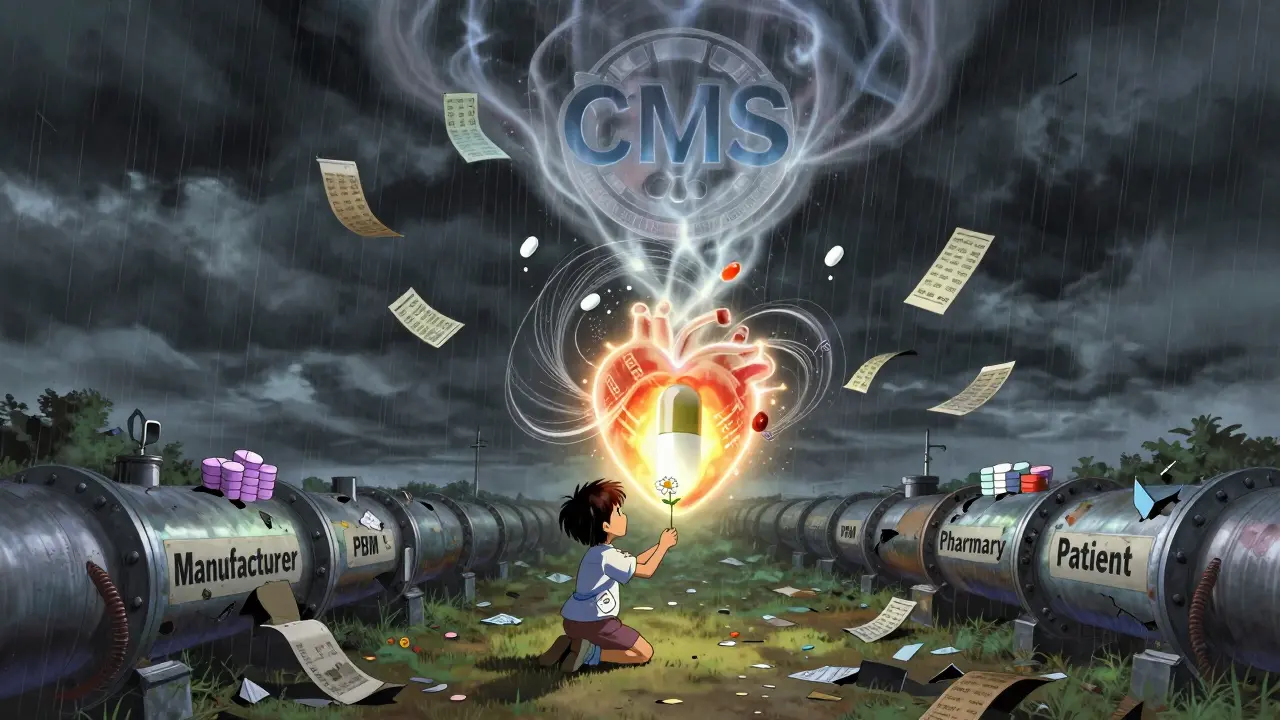
Supply Chain Cracks: When Generics Disappear
The biggest threat to cost control? Not high prices - but no supply. In 2023, 23 states reported shortages of critical generic drugs. Some lasted over 147 days. Why? Because three companies make 65% of all generic injectables. If one factory shuts down - for regulatory issues, labor strikes, or raw material shortages - the whole system stutters. States are waking up to this. Twelve passed laws in 2024 to build strategic stockpiles of essential generics. Oregon and Washington teamed up to buy 47 high-volume drugs together, locking in lower prices. Texas created a carve-out for gene therapies, but also started stockpiling antibiotics and heart medications. The goal isn’t just to avoid shortages. It’s to prevent price spikes that come with scarcity. When a drug is hard to find, prices jump - and Medicaid ends up paying more, even if it’s a generic.What’s Next? The Big Shift Coming
The federal government is stepping back. In March 2025, CMS canceled its own drug pricing model, leaving states to lead. Now, 15 more states are expected to introduce bills targeting generic drug prices in 2025. The focus is shifting from just controlling pharmacy payments to fixing the whole pipeline: manufacturers, PBMs, and supply chains. The Congressional Budget Office estimates these efforts could cut Medicaid generic spending by $3.8 billion a year by 2027. But there’s a warning: if states go too far, manufacturers may quit making cheap generics altogether. That could force patients onto pricier brand-name drugs - costing more in the long run. The tightrope? Saving money without losing access.Why don’t Medicaid states negotiate better prices for generic drugs like they do for brand-name drugs?
Federal law sets a fixed rebate formula for generics - 13% of the Average Manufacturer Price or the difference between that price and the best price offered elsewhere. Unlike brand-name drugs, where states can ask for extra rebates, there’s no legal flexibility for generics. This means even if a generic’s price spikes, the rebate doesn’t increase. States can’t haggle. They’re stuck with the federal rule.
How do Maximum Allowable Cost (MAC) lists actually save money?
MAC lists set a cap on how much Medicaid will pay for a generic drug. If a pharmacy charges more than the MAC, Medicaid won’t cover the full cost. This pushes pharmacies to buy from the cheapest suppliers and discourages price gouging. In 2024, 42 states used MAC lists, saving billions by preventing overpayment. But if the list isn’t updated often, it can hurt access - when drug prices drop below the MAC, pharmacies lose money on every fill.
Are generic drug shortages getting worse?
Yes. In 2023, 23 states reported shortages of critical generic medications, with an average duration of 147 days. The problem is consolidation: just three companies control 65% of the generic injectables market. When one factory has a problem, dozens of drugs vanish. States are now building stockpiles and forming multi-state buying groups to reduce this risk.
Do state price controls on generics actually work?
They do - but with limits. Maryland’s 2020 law cut price spikes by 15% on key generics. California’s price benchmarks have slowed increases. But manufacturers are fighting back in court, arguing states overstep. The Congressional Budget Office estimates these policies could reduce spending by 5-8% annually - but if they scare manufacturers away, shortages could make costs worse.
What’s the biggest threat to Medicaid’s generic drug savings?
The biggest threat isn’t high prices - it’s supply chain collapse. If a handful of manufacturers stop making a generic because it’s not profitable, patients lose access. States may then be forced to pay more for brand-name alternatives, undoing years of savings. That’s why states are now focusing on stockpiling, multi-state purchasing, and holding PBMs accountable - not just setting price caps.


