
Every year, over 6 billion prescriptions are filled in the U.S. - and nearly 93% of them are for generic drugs. But here’s the thing: generic substitution isn’t automatic. It doesn’t happen the same way in Oregon as it does in Hawaii. State laws control whether a pharmacist can swap a brand-name drug for a generic, and those rules vary wildly. For patients, this can mean confusion at the pharmacy counter. For pharmacists, it means juggling 50 different sets of rules every day.
How State Laws Decide If You Get a Generic
It starts with the FDA. The agency labels generics as therapeutically equivalent to brand-name drugs using the Orange Book. That means, in theory, they work the same. But states don’t just trust that. They add their own layers.
There are four big ways states differ:
- Pharmacist duty to substitute - In 22 states, pharmacists must substitute unless the doctor or patient says no. In 28 states and D.C., they can substitute - but they don’t have to. It’s optional.
- Patient consent - In 32 states, substitution happens unless you say no. That’s presumed consent. In 18 states, you have to say yes first. Explicit consent.
- Notification - 41 states require pharmacists to tell you after they make the switch. Some send a letter. Others just ask, "Did you know we changed your pill?" Some don’t notify at all.
- Liability protection - 37 states shield pharmacists from lawsuits if they follow the rules. But if they mess up? That’s on them.
Take New York vs. New Jersey. In New York, you have to give permission every time. In New Jersey, the pharmacist swaps it automatically. People who live near the border get confused. One pharmacist in the r/pharmacy Reddit thread said: "I had a patient from New Jersey move to New York. She was mad because I asked her if she wanted the generic. She said, ‘Back home, they just gave it to me.’"
When Substitution Gets Risky
Not all drugs are created equal. Some have a narrow therapeutic index (NTI) - meaning the difference between a dose that works and one that harms you is tiny. Warfarin. Levothyroxine. Epilepsy drugs. These are the ones that keep pharmacists up at night.
Even if the FDA says two drugs are equivalent, some patients react differently. The FDA’s own adverse event reports show 53 cases of problems linked to warfarin substitutions between 2020 and 2022. In Minnesota, a patient had a dangerous bleed after switching generics. The generic was rated "A" by the FDA - but the body didn’t treat it the same way.
That’s why 15 states - including Kentucky and Ohio - keep their own lists of NTI drugs that can’t be swapped without the doctor’s okay. Hawaii is the strictest: even for biosimilars (newer, complex generics), you need both the doctor and patient to sign off before any substitution.
Why Some States Push Harder for Substitution
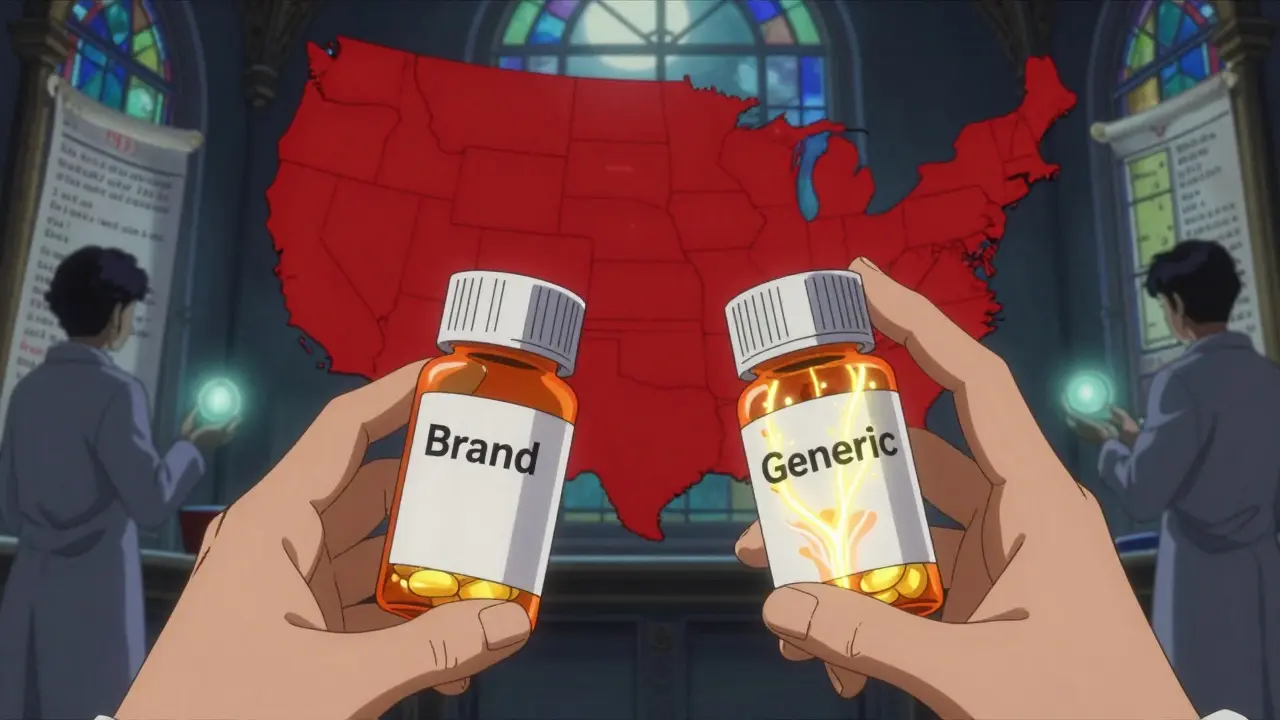
Money drives a lot of this. Generic drugs saved the U.S. system $1.7 trillion between 2009 and 2019. States with mandatory substitution laws saw 12.3% higher generic fill rates for statins alone. Medicaid programs saved $1.2 billion a year in just 27 states because of these laws.
But it’s not just about cost. A 2022 survey of 1,200 independent pharmacists found that mandatory substitution cut patient abandonment rates by 15.2%. Why? Because generics are cheaper. If a patient can’t afford the brand, they might just not fill the script. A generic can mean the difference between taking medicine and skipping it.
Pharmacists in Texas told researchers that for atorvastatin (a cholesterol drug), fewer patients walked away when generics were automatic. Same story in California and Florida. The system works better when substitution is the default - if you’re not paying extra.
The Patchwork Problem
Imagine you’re a pharmacist in a national chain. You work in Ohio today. Tomorrow, you’re in California. The next day, you’re in Hawaii. Each state has different rules on:
- When you can substitute
- How you get consent
- Which drugs are off-limits
- What you have to document
Pharmacists spend an average of 12.7 minutes per prescription checking all these rules. That’s not time spent counseling patients. It’s time spent digging through state law databases.
And it gets worse when prescriptions cross state lines. About 18% of transactions in chain pharmacies involve prescriptions written in one state but filled in another. A doctor in Pennsylvania writes for a patient living in Maryland. The pharmacy in Maryland has to know Pennsylvania’s rules - even if they’re different.
That’s why 78% of pharmacists say they’re confused by the patchwork. The American Pharmacists Association says it’s time for a national standard. But lawmakers are divided. Some want uniformity. Others say states know their populations best.
Technology Is Helping - But Not Everywhere
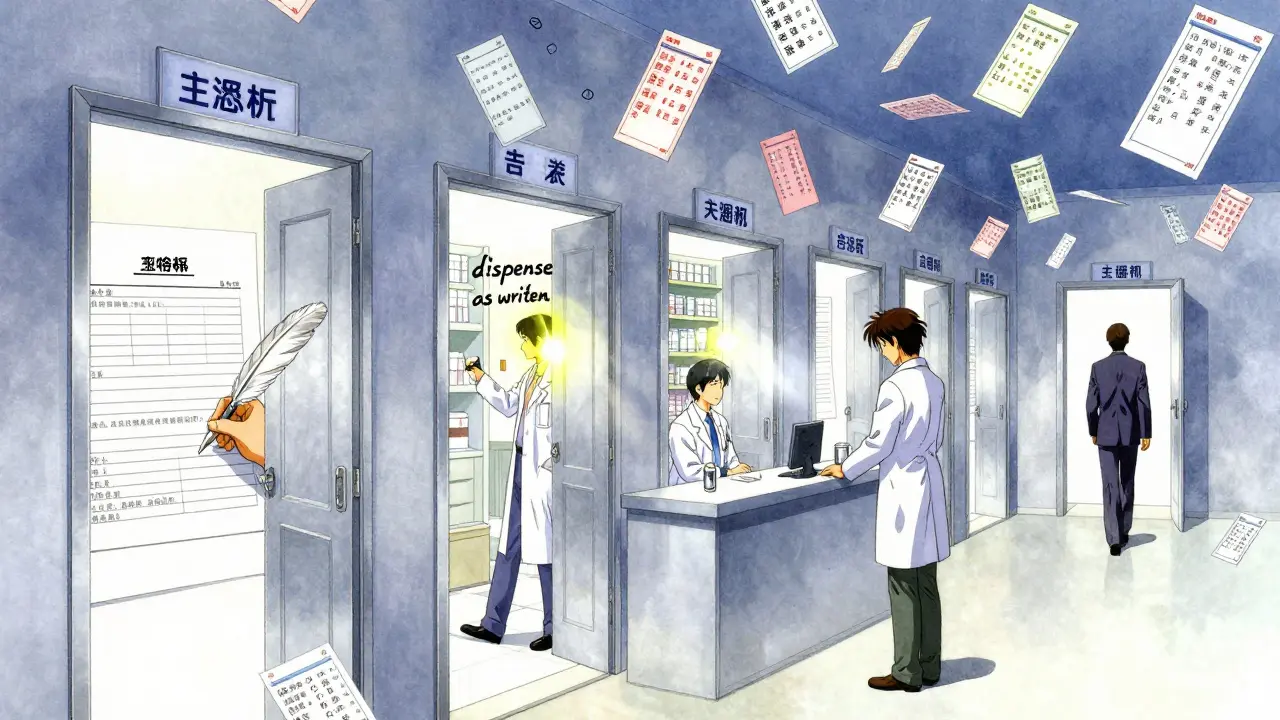
Most modern pharmacy systems now have built-in state law checkers. They pull real-time updates from state boards. When a script comes in, the system auto-checks: "Is this an NTI drug in this state? Does the patient need to sign? Did the prescriber say ‘dispense as written’?"
That’s cut substitution errors by 64%. In 2023, 83% of pharmacies used these tools. But not all do. Small independent shops? Many still rely on paper handbooks or outdated websites. A 2022 study found that pharmacies without automated systems had 3x more substitution mistakes.
And even with tech, you still need trained staff. Pharmacy schools now require 45 to 60 hours of training just on state substitution laws. The National Association of Boards of Pharmacy says 92% of states test this knowledge on licensing exams.
What This Means for You
If you’re a patient:
- Ask: "Is this a generic?" - even if it’s automatic.
- If you’re on warfarin, levothyroxine, or seizure meds - ask your doctor to write "dispense as written" on the script.
- Know your state’s rules. In some places, you have to say no to get the brand. In others, you have to say yes to get the generic.
If you’re a pharmacist:
- Use your pharmacy software’s state checker - don’t guess.
- Document every refusal. Save the patient’s signature or note the date and time they declined.
- Know your state’s NTI list. It’s not always the same as the FDA’s.
The bottom line: generic drugs are safe, effective, and save billions. But the system that lets them be swapped is a maze. And until states start aligning their rules, patients and pharmacists will keep stumbling through it.
Can a pharmacist substitute a generic drug without my permission?
It depends on your state. In 32 states, substitution happens automatically unless you say no - that’s called presumed consent. In 18 states, you must give explicit permission before the pharmacist can switch your medication. Always ask if you’re unsure.
Are all generic drugs the same as brand-name drugs?
The FDA says yes - if they’re rated "A" in the Orange Book. But for drugs with a narrow therapeutic index (like warfarin or levothyroxine), some patients report differences in how they feel after switching. That’s why some states block substitution for these drugs unless the doctor says it’s okay.
Why do some states ban generic substitution for epilepsy drugs?
Because even small changes in blood levels of antiepileptic drugs can trigger seizures. While generics are approved as equivalent, real-world reports show some patients have breakthrough seizures after switching. States like Hawaii, Kentucky, and Ohio require the prescriber to specifically allow substitution - or ban it entirely.
Do I have to pay less if I get a generic?
Usually, yes. Most insurance plans and Medicaid programs have lower copays for generics. In fact, in states with mandatory substitution, patients are 15% less likely to abandon prescriptions because they can’t afford the brand. But always check your plan - some insurers charge the same for both.
Can I request the brand-name drug even if a generic is available?
Yes - in every state. You can always ask for the brand. But you might pay more out-of-pocket. Some doctors will write "dispense as written" on the prescription to block substitution. That’s legal and common for patients on sensitive medications like thyroid or blood thinners.


