

When you get a prescription through a telehealth visit, it's not as simple as it seems. The rules for telemedicine prescriptions have changed dramatically since 2020, especially for controlled substances. For example, while generic antidepressants like sertraline can be prescribed via telemedicine without restrictions, drugs like buprenorphine for opioid addiction face strict limits. Here's what you need to know about how telemedicine prescriptions work today.
Current DEA Rules: A New Regulatory Landscape
The DEA the U.S. Drug Enforcement Administration, which regulates controlled substance prescriptions made major changes in 2025. After the pandemic, temporary rules allowing telemedicine prescribing of controlled substances were extended through December 31, 2025. But these were never meant to be permanent. In January 2025, the DEA proposed three new registration categories that will shape how doctors prescribe medications online. These rules specifically target controlled substances like opioids and stimulants, while non-controlled generics face far fewer restrictions.
For instance, the Telemedicine Prescribing Registration allows doctors to prescribe Schedule III-V controlled substances for opioid use disorder without an in-person visit-but only for six months initially. After that, patients must either see a doctor in person or continue under strict conditions. This registration also requires doctors to check state PDMP Prescription Drug Monitoring Program, a state-level database tracking controlled substance prescriptions data before prescribing and to use electronic prescribing for controlled substances (EPCS).
Controlled Substances vs. Non-Controlled Generics
| Substance Type | Prescribing Rules | Key Requirements |
|---|---|---|
| Controlled Substances (Schedule III-V) | Requires specific DEA registration | PDMP check, EPCS, identity verification |
| Non-Controlled Generics (e.g., sertraline) | No federal restrictions | Standard telehealth protocols |
This table shows the biggest difference: non-controlled generics like sertraline (a common antidepressant) can be prescribed indefinitely via telemedicine with no special DEA registration. But Schedule III-V drugs like generic buprenorphine (used for opioid addiction treatment) have strict limits. The DEA even delayed two final rules about buprenorphine treatment until December 2025, showing how complex this issue is.
Why does this matter? Take buprenorphine. It's a generic medication, but because it's a Schedule III controlled substance, it falls under the six-month rule. This creates a paradox: a generic drug used for addiction treatment faces more restrictions than brand-name drugs for non-controlled conditions. The Ryan Haight Act a 2008 law requiring in-person exams before prescribing controlled substances was designed to prevent online drug abuse, but its modern application has created real access barriers.
State Laws Create Patchwork of Rules
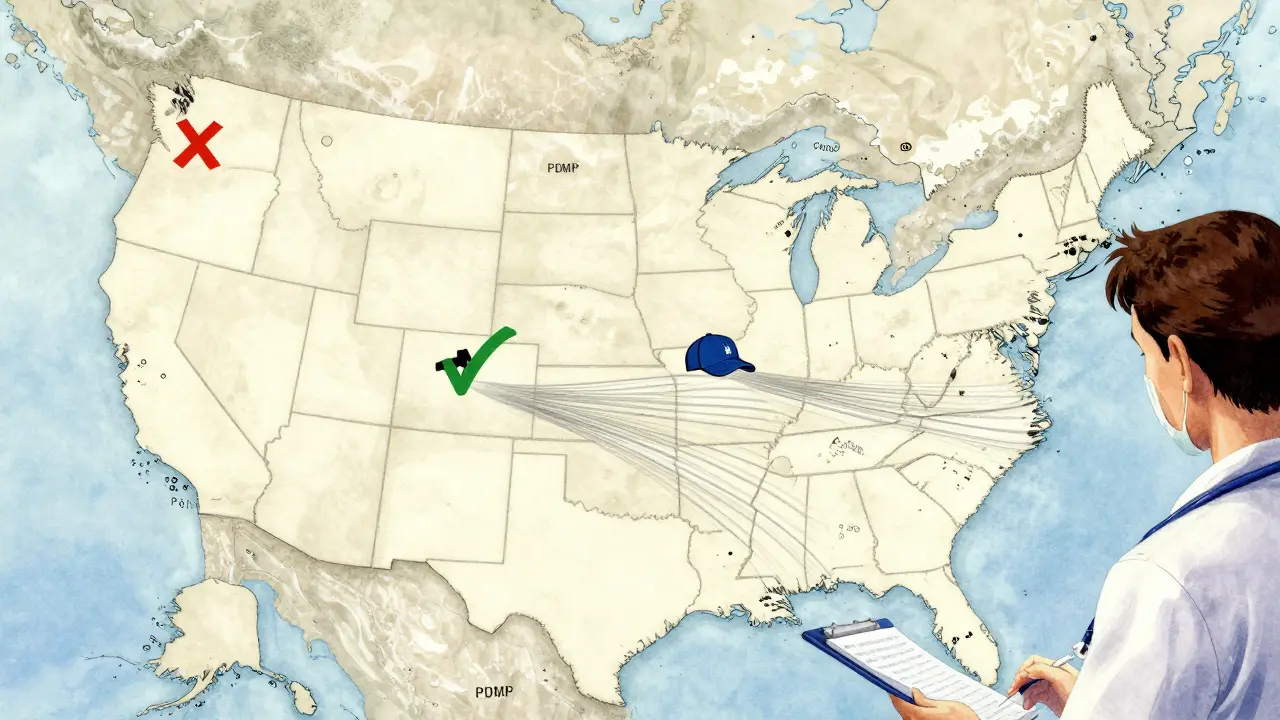
While federal rules set the baseline, state laws add another layer of complexity. Arkansas prohibits any telemedicine prescriptions for controlled substances without an in-person exam. California allows telemedicine prescribing of non-controlled generics with no restrictions. But in states like Texas, doctors must complete extra training to prescribe controlled substances via telemedicine. This patchwork makes it hard for providers who serve patients across state lines.
For example, a psychiatrist in California might prescribe buprenorphine to a patient in Nevada under federal rules. But if the pharmacy in Nevada isn't trained on the new regulations, they might reject the prescription. This happened to a telehealth provider on Reddit who had three prescriptions rejected in one month. "I'm following federal rules, but local pharmacies don't know how to process them," they wrote. This inconsistency creates confusion for both doctors and patients.
Real-World Challenges for Providers
Doctors face serious hurdles implementing these rules. The EPCS Electronic Prescribing of Controlled Substances, a secure system for digital prescriptions requirement alone takes 8-12 weeks to set up. Many rural clinics struggle with integrating PDMP data across multiple states. Dr. Michael Reynolds, a Montana family physician, says checking PDMPs for 12 counties across three states adds 15-20 minutes to each appointment. "It's crippling our practice," he told the American Telemedicine Association.
Documentation is another pain point. The DEA requires exact timestamps for PDMP checks in patient records. A 2025 survey found psychiatrists spend 2.7 extra hours per day on paperwork due to these rules. Meanwhile, only 37% of telehealth platforms have implemented the required PDMP integration systems, according to DEA data. This gap means many providers are at risk of non-compliance.

What's Next in 2026
By the end of 2025, the current temporary rules expire. Providers must then operate under the new DEA registration system. Industry analysts predict a 15-20% drop in telemedicine-based controlled substance prescribing by 2026 as platforms adjust. But for non-controlled generics, the future looks bright-projected to grow 28.4% annually through 2030.
The DEA is building a national PDMP system with $127 million in funding, but experts warn it won't be fully functional until late 2027. Until then, providers will continue to face state-by-state challenges. The American Medical Association has criticized the PDMP requirement as "technically unfeasible" before phase-in periods end. Meanwhile, patient advocates report positive outcomes: 73% of those surveyed said telemedicine improved access to life-saving addiction treatment.
Frequently Asked Questions
Can I get a prescription for Adderall via telemedicine?
Adderall is a Schedule II controlled substance. As of 2025, only board-certified psychiatrists, hospice care physicians, neurologists, and pediatricians can prescribe Schedule II drugs via telemedicine under the Advanced Telemedicine Prescribing Registration. Primary care providers generally can't prescribe Adderall through telemedicine unless they meet specific criteria. Always check with your provider about current regulations.
Why are generic buprenorphine prescriptions limited to six months via telemedicine?
Buprenorphine is a Schedule III controlled substance, so it falls under DEA rules requiring an initial in-person evaluation for most prescriptions. The six-month limit was designed to balance access with safety. However, addiction specialists argue this contradicts clinical evidence showing 12 months of medication-assisted treatment yields better outcomes. The DEA is reviewing feedback on this rule before finalizing it.
Do telemedicine prescriptions work for mental health medications?
Yes, for non-controlled mental health medications like sertraline (Zoloft) or fluoxetine (Prozac), telemedicine prescriptions have no federal restrictions. Providers just need standard telehealth credentials. But for controlled substances like stimulants used for ADHD, stricter rules apply. Always confirm which category your medication falls under.
What happens if a pharmacy rejects my telemedicine prescription?
Pharmacies may reject prescriptions due to unfamiliarity with new regulations. If this happens, ask your provider to contact the pharmacy directly. They can explain the DEA registration status and provide documentation. The DEA's Telemedicine Prescribing Resource Center also offers guidance for pharmacies facing these issues.
Can I get a telemedicine prescription for opioids like oxycodone?
No. Oxycodone is a Schedule II controlled substance, and telemedicine prescribing for Schedule II drugs remains extremely restricted. Only specialized providers under the Advanced Telemedicine Prescribing Registration can prescribe them, and even then, only for specific cases like hospice care or long-term facility patients. Most patients needing opioids must see a doctor in person.


