

When you fill a prescription for a generic drug, you’re saving money - but are you actually taking it? For millions of Americans managing chronic conditions like hypertension, diabetes, or asthma, generic medications are the backbone of treatment. Yet, nearly half of those patients stop taking them within a year. That’s not just a personal health risk - it’s a $300 billion problem for the U.S. healthcare system. The gap isn’t because generics don’t work. It’s because taking pills every day, for years, is hard. And until recently, there was little support for people on generics. That’s where digital adherence tracking comes in.
Why Generics Need Special Attention
Generic drugs make up 90% of all prescriptions filled in the U.S. They’re chemically identical to brand-name drugs but cost a fraction of the price. That’s why insurers and pharmacies push them. But here’s the catch: patients are more likely to skip doses of generics than brand-name drugs. Why? Because generics often lack the marketing, patient support programs, and reminder systems that come with branded medications. A patient on a $4 generic for high blood pressure might not feel the immediate benefit - and without regular check-ins, they’ll quit. The result? More hospital visits, more emergency care, and higher long-term costs.How Digital Tools Are Changing the Game
Digital adherence tools are no longer sci-fi. They’re real, and they’re being used in pharmacies and homes across the country. These systems don’t just remind you to take your pill - they prove you took it.Take the MEMS AS system from AARDEX Group. Used in clinical trials for over a decade, it tracks medication events with 100% accuracy by recording when a pill bottle is opened. It’s the gold standard for research - but it’s not designed for everyday patients. It’s expensive, complex, and meant for doctors and researchers, not people managing their own health.
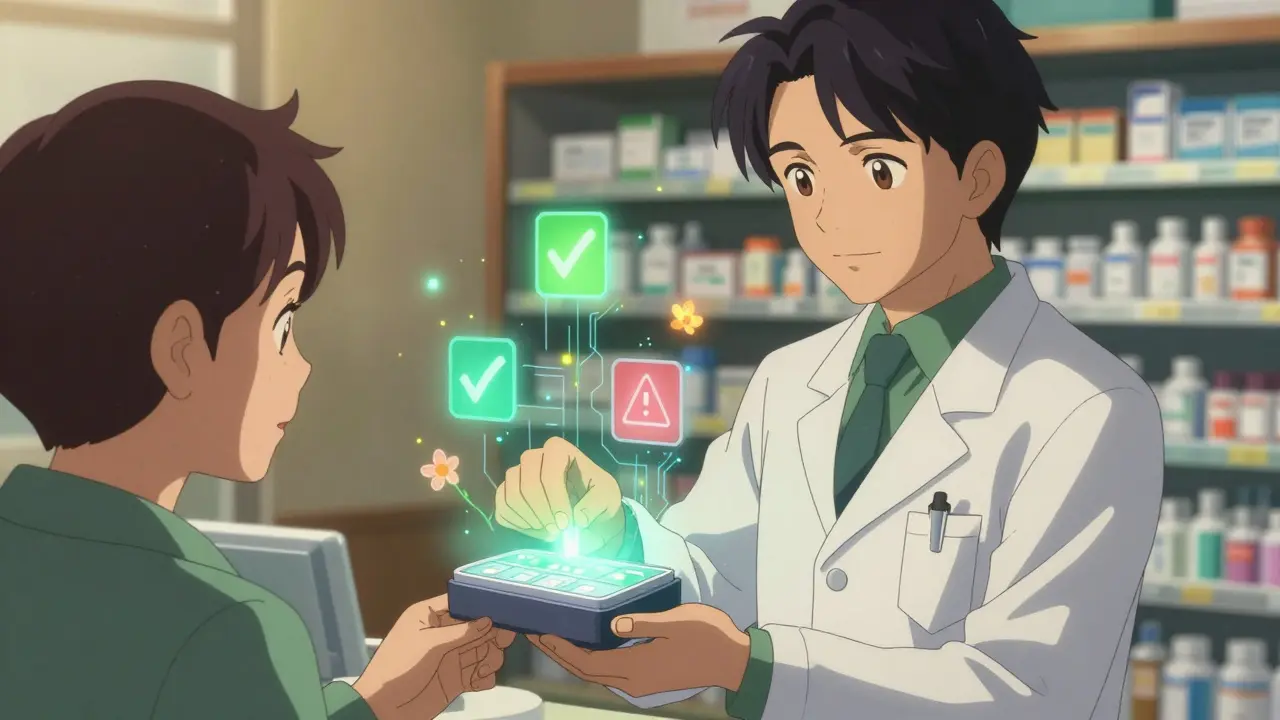
On the consumer side, the Tenovi Pillbox is gaining traction. It’s a smart pill container with color-coded LED lights: red for missed doses, green for completed. It connects via cellular signal and sends updates to your phone, your pharmacist, and even your doctor. One user on Amazon said, “It saved my life with my four daily meds.” But it’s not perfect. The device needs charging every few days, and the $149 price tag plus $30 monthly fee puts it out of reach for many.
Then there’s VDOT (Video Directly Observed Therapy). It uses video calls to confirm pill ingestion - 95% accurate for TB and asthma meds. But 30% of users quit because it felt invasive. Who wants to film themselves taking medicine every morning?
What Works Best - and What Doesn’t
Not all tools are built the same. Here’s how the top systems compare:| Tool | How It Works | Accuracy | Cost | Best For | Drawbacks |
|---|---|---|---|---|---|
| MEMS AS | Smart bottle opens record dose times | 100% | $500+/month (clinic use) | Clinical trials, research | Too complex for patients; no engagement features |
| Tenovi Pillbox | Cellular-connected smart box with LED reminders | 92-95% | $149 device + $29.99/month | Chronic disease, polypharmacy | Battery life, high cost, privacy concerns |
| VDOT | Video confirmation via smartphone | 92-95% | Often covered by insurance | High-risk conditions (asthma, COPD) | 30% dropout rate; feels invasive |
| McKesson APS | Pharmacy claims data analysis | 80-85% (estimates) | $99-$299/month (pharmacy subscription) | Pharmacies tracking refill patterns | Can’t prove actual ingestion; 15-20% error rate |
| Wisepill | Electronic blister packs with cellular tracking | 88% | $75/device + $15/month | Single-medication regimens | Not ideal for complex dosing schedules |
Pharmacies using McKesson’s APS dashboard saw diabetes adherence jump from 62% to 78% - but only after hiring a full-time technician to manage the data. Meanwhile, patients using Tenovi reported a 28% improvement in adherence compared to phone alerts alone. But 40% said the constant monitoring felt like being watched. There’s no one-size-fits-all solution.
The Hidden Barriers
Even the best tech fails if it doesn’t fit real life. Many patients don’t use these tools because:- The device is too bulky or hard to charge
- They don’t trust the data or don’t understand how it’s used
- They’re embarrassed to show their pill-taking habits
- The system doesn’t integrate with their pharmacy or EHR
A study of 22 patients using Med-eMonitor showed 64% adopted it at 30 days - but only 45% were still using it at 60 days. The main reason? “Too much hassle.”
And here’s another problem: most apps out there are junk. Researchers found over 2,000 medication adherence apps - but only seven met basic standards for accuracy, privacy, and usability. Many just send reminders. They don’t track. They don’t verify. They don’t help.
What’s Working in Real Pharmacies
The most successful programs combine tech with human touch. A pharmacist in Portland told me: “I ask every patient on three or more meds: ‘Do you ever forget?’ If they say yes, I show them a simple tracker. No sales pitch. Just, ‘This might help.’”That’s the key. Tools like Tenovi or Wisepill work best when:
- A pharmacist identifies the patient’s risk during pickup
- The tool is set up together - not mailed in
- The patient gets a 3-minute demo on how it works
- The system syncs with their pharmacy’s records
One AHRQ case study found patients on five or more medications had a 35% better outcome when they got both a tracker and a follow-up call from their pharmacist. That’s the sweet spot: tech + human care.

The Future: AI, Reimbursement, and Integration
In 2023, CMS started tying Medicare Advantage payments to adherence rates for generics. A 1-point increase in adherence = $1.2 million more in revenue per 100,000 members. That’s driving hospitals and pharmacies to invest.CVS Health is testing AI that predicts who’s likely to stop taking their meds - using refill patterns, age, and even weather. In trials, it flagged at-risk patients 22% better than old methods.
But until reimbursement catches up, adoption will be slow. Only 38% of Medicare Advantage plans cover remote therapeutic monitoring. Independent pharmacies? Only 18% use any digital tool. Big chains? 67% do.
By 2025, experts predict only 3-5 major platforms will dominate - integrated directly into pharmacy benefit systems. That’s good news. It means simpler, cheaper, and more reliable tools will emerge.
What You Can Do Today
If you’re managing a chronic condition on generics:- Ask your pharmacist: “Do you have a tool to help me remember my pills?”
- Don’t assume your phone alarm is enough - it’s not tracking.
- Look for systems that sync with your pharmacy (like Tenovi or Wisepill).
- Try free options first: some pharmacies offer basic trackers at no cost.
- Track your own refills. If you refill 2 weeks early every time, you’re likely skipping doses.
If you’re a pharmacy owner:
- Start with McKesson APS or similar - it’s affordable and integrates fast.
- Train staff to screen for adherence risk during pickup.
- Partner with a tool provider that offers patient support, not just data.
Final Thought
Digital adherence tools aren’t magic. They won’t fix a system that ignores patient behavior. But they’re the first real step toward making generics work - not just for insurers, but for people. The goal isn’t to monitor every pill. It’s to make sure the right people get the right care - without shame, without burden, and without cost.Do digital adherence tools really improve health outcomes?
Yes - but only when used correctly. Studies show that tools like Tenovi and VDOT improve adherence by 20-30% in chronic conditions like hypertension and asthma. When combined with pharmacist support, those numbers jump to 35% or higher. The real win? Fewer hospitalizations. For every $1 spent on adherence tools for cardiovascular generics, $7.20 is saved in healthcare costs. It’s not about tracking pills - it’s about keeping people out of the ER.
Are these tools covered by insurance?
Mostly, no - not yet. Only 38% of Medicare Advantage plans cover remote therapeutic monitoring as of 2023. Some private insurers cover it for high-risk patients with asthma, COPD, or heart failure. Medicaid coverage varies by state. Consumer devices like Tenovi are typically out-of-pocket. But if your pharmacy uses McKesson APS or similar, the cost is absorbed by the pharmacy - not you.
Can I use my smartphone app to track my generics?
Basic reminder apps (like Medisafe or MyTherapy) can help, but they don’t prove you took the pill. They rely on self-reporting - and studies show patients overreport adherence by 40%. For true tracking, you need a device that records actual ingestion - like a smart pillbox, blister pack, or bottle sensor. Phone alerts alone aren’t enough to change behavior long-term.
What’s the cheapest way to start tracking?
Start with your pharmacy. Many offer free adherence programs using simple pill organizers with date stamps. Some even provide basic Bluetooth pill bottles at no cost. If you’re on a fixed income, ask about patient assistance programs - companies like Wisepill and AARDEX offer discounted devices for low-income users. The cheapest option? A paper log and a weekly check-in with your pharmacist.
Is my data safe if I use a digital tracker?
It depends. Reputable systems like MEMS AS, Tenovi, and Wisepill use HIPAA-compliant encryption and don’t share data with insurers without consent. But many apps - especially free ones - sell data to advertisers or third parties. Always check the privacy policy. If it doesn’t clearly say “We do not sell your data,” walk away. Ask your pharmacist which systems they trust. They’ve seen the bad ones.
Can digital tracking replace pharmacist counseling?
No - and it shouldn’t. Tech is a tool, not a replacement. The most effective programs combine digital tracking with brief pharmacist interventions. A 3-minute conversation during pickup can double adherence rates. Patients need to feel supported, not surveilled. The best systems empower pharmacists to act on data - not just collect it.