
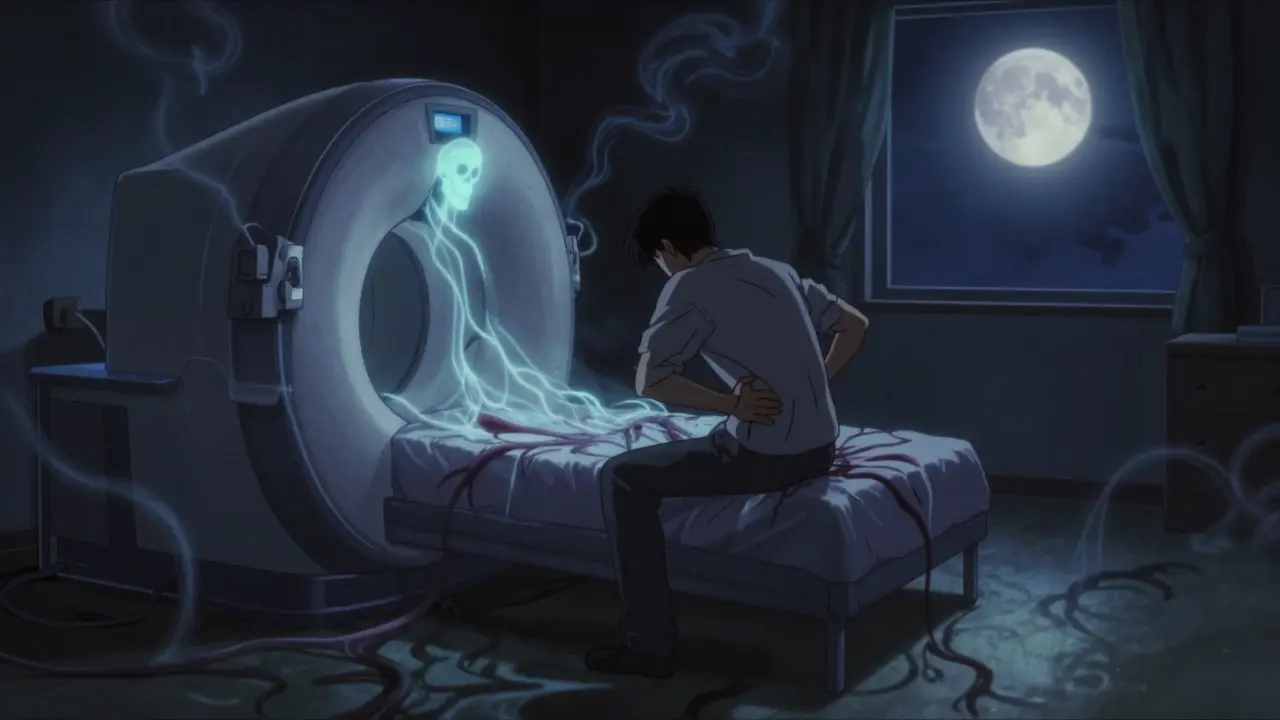
Most people experience back pain at some point. It’s common, often dull, and usually goes away on its own within a few weeks. But when back pain is more than just a nuisance - when it comes with warning signs - it could signal something serious. Ignoring those signs can lead to permanent nerve damage, infection spread, or even paralysis. The key isn’t to panic over every ache, but to know when to act.
What Are Back Pain Red Flags?
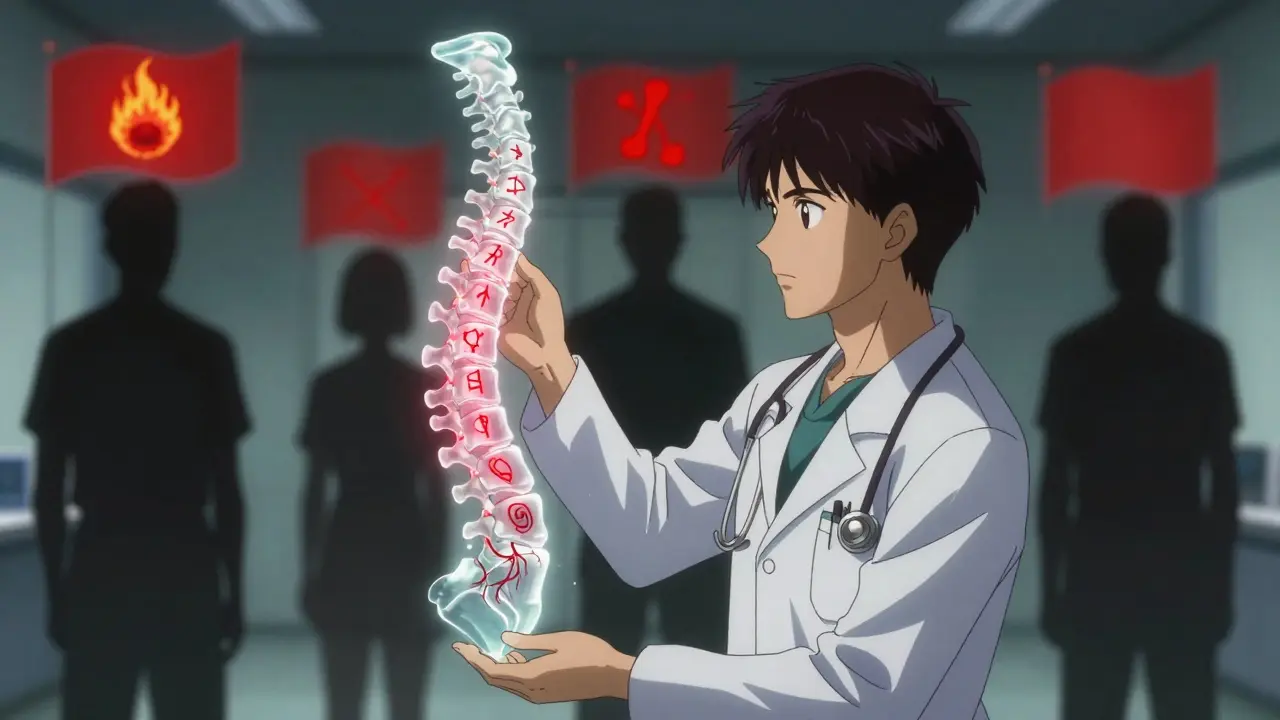
Red flags aren’t symptoms you see on a scan. They’re clues in your history and physical exam that tell a doctor: this might not be just muscle strain. The American College of Physicians, the American College of Emergency Physicians, and other major groups agree: over 90% of back pain cases are harmless. But the remaining 10%? Those can be life-altering if missed.These red flags help doctors avoid two mistakes: ordering too many scans on people who don’t need them (which costs money and exposes people to unnecessary radiation), and missing a serious condition like a spinal infection or tumor. Studies show that when red flags are used correctly, unnecessary imaging drops by nearly 30% - without missing a single case of serious disease.
When to Suspect a Spinal Infection
Spinal infections - like osteomyelitis or epidural abscess - are rare but dangerous. They don’t always start with a fever. Sometimes, the only clue is pain that doesn’t improve with rest, ibuprofen, or even strong painkillers.Here’s what to watch for:
- Pain that gets worse at night or keeps you awake
- Fever, chills, or unexplained weight loss
- Recent infection (like a UTI, pneumonia, or skin abscess)
- History of IV drug use, dialysis, or recent spinal surgery
One study found that 78% of people with spinal infections had pain that didn’t improve with pain meds - compared to just 22% with regular back pain. If you’ve had a recent infection and now your lower back is throbbing, don’t wait. An MRI is the gold standard for detecting these infections early. Delayed treatment can mean permanent nerve damage or even death.
Could It Be a Fracture?
Fractures in the spine aren’t just from car crashes. In older adults, even a simple fall or sneeze can break a weakened vertebra. This is especially true if you have osteoporosis, take steroids long-term, or are over 50.Key signs:
- Recent trauma - even minor
- Age over 50 with new back pain
- History of osteoporosis or long-term steroid use
- Pain that worsens with movement or standing
Plain X-rays miss up to 36% of fractures in older adults. That’s why CT scans are now preferred for high-risk patients. A 2019 study showed CT detects fractures with 98% accuracy - far better than X-ray’s 64%. If you’re over 70 and have back pain after a fall, getting a CT scan is often the right move - even if you didn’t feel a “pop” or fall hard.
Red Flags for Cancer
Cancer spreading to the spine is uncommon, but it happens. The biggest red flag? A personal history of cancer - especially breast, lung, prostate, or kidney cancer. If you’ve had cancer in the past and now have new back pain, assume it’s related until proven otherwise.Other warning signs:
- Pain that doesn’t improve with rest
- Pain worse at night
- Unexplained weight loss
- History of smoking or heavy alcohol use
Studies show that if you’ve had cancer before, your chance of having spinal metastasis with new back pain is 6.4 to 15 times higher than someone without that history. MRI is the best test here - it picks up tumors before they destroy bone or press on nerves. Waiting too long can mean losing mobility or bladder control.
Cauda Equina Syndrome: The Emergency
This is the one condition you can’t afford to delay. Cauda equina syndrome happens when a herniated disc or tumor compresses the bundle of nerves at the bottom of your spinal cord. It’s rare - less than 1 in 100,000 people - but if you miss it, you could lose bladder and bowel control forever.Here’s what it looks like:
- Loss of bladder or bowel control (inability to urinate or incontinence)
- Numbness in the saddle area - groin, inner thighs, buttocks
- Sudden weakness or numbness in both legs
- Severe or worsening sciatica in both legs
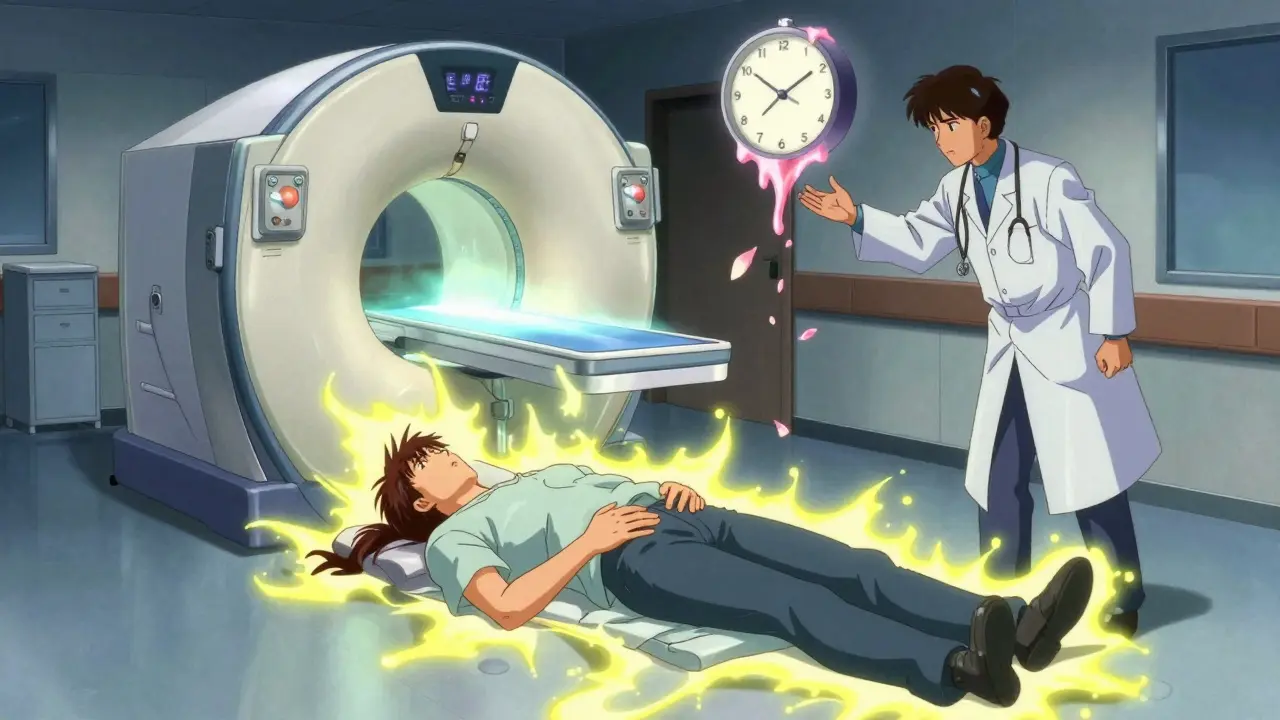
If you have any of these, go to the ER now. MRI is the test of choice, and surgery needs to happen within 48 hours to prevent permanent damage. A 2020 study found MRI detects this condition with 95% accuracy - much better than CT’s 78%. Don’t wait for your doctor’s office to open. Don’t call for an appointment. Go to the emergency room.
When to Wait - And When to Act
Most back pain gets better with time. Movement, heat, and over-the-counter pain relievers help. But if you’re unsure, ask yourself:- Is this pain getting worse, not better?
- Have I had cancer, a recent infection, or a fall?
- Am I over 50 with no prior back issues?
- Do I have numbness in my groin or trouble peeing?
If you answered yes to any of these, don’t wait. Get checked. If none apply, give it four to six weeks. That’s the window most guidelines recommend before imaging. A 2018 study showed that people who didn’t improve after four weeks were nearly 20 times more likely to need surgery than those who got better.
Why Imaging Isn’t Always the Answer
You might think: “If I’m in pain, shouldn’t I get an MRI?” Not necessarily. MRIs show disc bulges, arthritis, and degeneration in 79% of people over 80 - even if they have no pain at all. Finding one of these on a scan doesn’t mean it’s causing your pain. It might just be normal aging.Overuse of imaging leads to more harm than good. It can cause anxiety, lead to unnecessary surgeries, and cost thousands of dollars. The Choosing Wisely campaign, backed by major medical groups, says: Don’t image low back pain without red flags. Insurance companies like Anthem now deny coverage for these scans 42% of the time when no red flags are present.
What Happens After a Red Flag Is Found?
If your doctor spots a red flag, here’s what typically happens next:- Spinal infection or tumor: MRI with contrast. Blood tests for inflammation (CRP, ESR). Referral to an infectious disease specialist or oncologist.
- Fracture: CT scan. Bone density test if you’re over 50. Referral to orthopedics or spine surgeon.
- Cauda equina: Emergency MRI. Surgical consultation within hours.
- Neurological deficits: MRI. Neurology referral.
Physical therapists and primary care providers are trained to spot these signs. If your therapist says, “You need to see your doctor right away,” listen. Delaying referral is one of the top reasons for malpractice claims in spine care - 12% of lawsuits involve missed red flags.
New Tools on the Horizon
The future of red flag detection is getting smarter. A 2023 study tested a new tool called the STarT Back questionnaire, which uses answers to nine simple questions to predict risk of serious pathology with 83% accuracy. It’s not in every clinic yet, but it’s coming.Another promising tool is point-of-care ultrasound (POCUS). Emergency rooms are starting to use it to check bladder volume - if your bladder is full and you can’t urinate, that’s a red flag for cauda equina. POCUS caught this in 92% of cases, and it could cut unnecessary MRIs by over a third.
And soon, blood tests might help. The INTEGRATE trial is testing whether high levels of CRP and ESR - markers of inflammation - can pinpoint spinal infections faster. Right now, it takes nearly three weeks on average to diagnose these infections. With better tools, we could cut that time in half.
Bottom Line: Know the Signs, Don’t Panic
Back pain is common. But serious causes? They’re rare - and they don’t whisper. They scream. Night pain. Loss of bladder control. History of cancer. Trauma after 50. These aren’t guesses. They’re clear signals.If you have one or more of these red flags, don’t wait. Don’t hope it goes away. See a doctor today. If you don’t have any red flags, give it time. Move. Stretch. Use pain relievers. Most cases improve on their own.
The goal isn’t to scan everyone. It’s to catch the few who need help - before it’s too late.
What are the most dangerous back pain red flags?
The most dangerous red flags are those linked to conditions that cause permanent damage if not treated quickly: cauda equina syndrome (loss of bladder/bowel control, saddle numbness), spinal infection (fever, night pain, recent infection), and spinal fracture (trauma in older adults or those with osteoporosis). These require immediate medical attention - often within hours.
Can I wait to get an MRI if my back pain is bad but I have no red flags?
Yes. If you have no red flags - no trauma, no fever, no numbness, no cancer history - waiting four to six weeks is the recommended approach. Most back pain improves with movement, heat, and time. Getting an MRI too early often shows normal age-related changes that don’t explain your pain, leading to unnecessary worry or procedures.
Is back pain in someone under 50 ever serious?
Yes, though it’s rare. Younger people can develop spinal infections, tumors, or inflammatory conditions like ankylosing spondylitis. If the pain is severe, persistent, worse at night, or accompanied by fever, weight loss, or neurological symptoms, it should be evaluated - regardless of age.
Why do doctors avoid ordering MRIs for back pain?
Because MRIs often show abnormalities - like disc bulges or arthritis - in people who have no pain at all. In fact, nearly 80% of asymptomatic 80-year-olds have disc degeneration on MRI. Ordering scans without red flags leads to false positives, unnecessary surgeries, higher costs, and patient anxiety. Guidelines recommend imaging only when red flags are present.
What should I do if I suspect cauda equina syndrome?
Go to the emergency room immediately. Cauda equina syndrome is a medical emergency. Symptoms include loss of bladder or bowel control, numbness in the groin or inner thighs, and sudden weakness in both legs. Surgery to relieve pressure on the nerves must happen within 48 hours to prevent permanent disability.


