
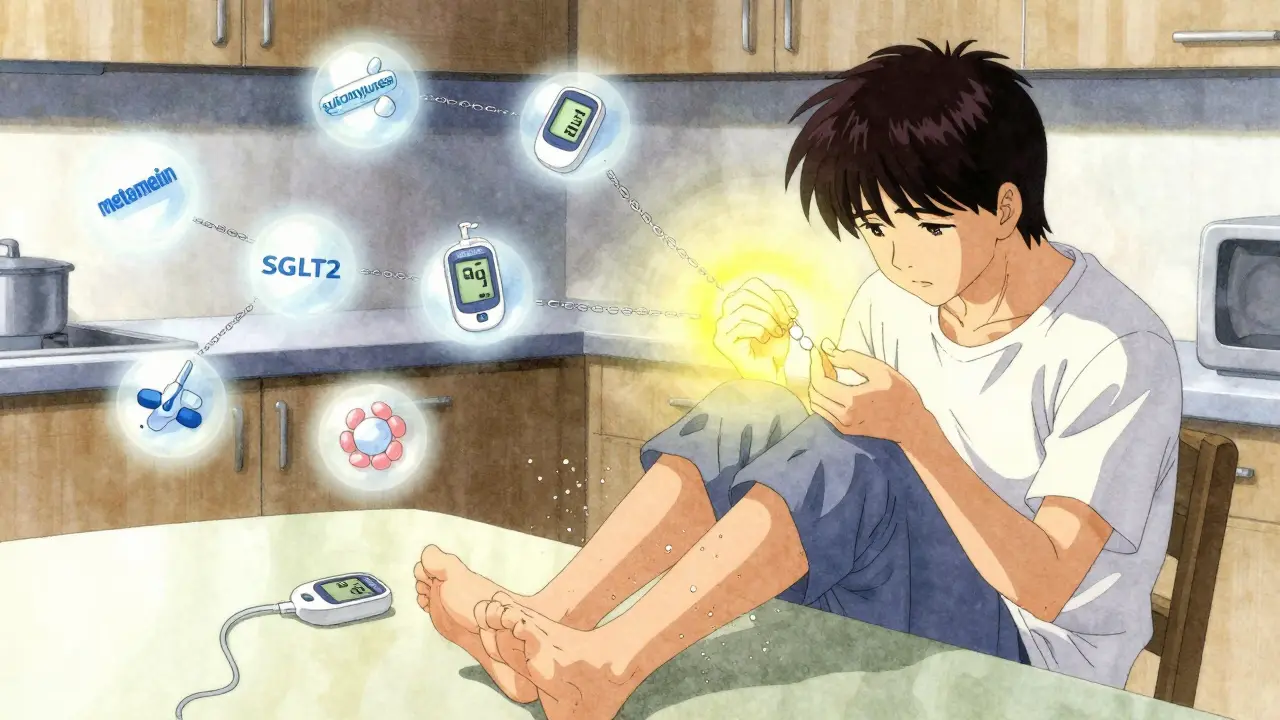
Diabetes Medication Side Effect & Glucose Impact Calculator
Select Your Medication
Medication Insights
Select a medication to see side effects and glucose impact
Managing diabetes isn’t just about checking blood sugar numbers. It’s about living with the side effects of the very drugs meant to help you. For millions of Americans, the battle isn’t just with high glucose-it’s with nausea, infections, dizziness, and the fear of crashing too low. And when side effects hit hard, people stop taking their meds. That’s not laziness. It’s survival. Half of all people with Type 2 diabetes quit their first medication within a year-not because they don’t care, but because the cost of taking it feels higher than the benefit.
Metformin: The First-Line Drug With a Rough Start
Metformin is the most prescribed diabetes drug in the U.S., used by about 80% of people with Type 2 diabetes. It’s cheap, effective, and doesn’t cause low blood sugar. But for nearly one in three people, it feels like a stomach bug that won’t quit. Heartburn, bloating, nausea, diarrhea-these aren’t rare side effects. They’re the norm. And they often start on day one.
Here’s what actually works: start low. Take 500 mg once a day with dinner, not on an empty stomach. Wait two weeks. If you can tolerate it, bump up to 500 mg twice a day. Most people find relief after a month. The extended-release version (Glumetza, Fortamet) cuts GI issues by about 30%. It’s not magic, but it’s enough to keep people on track.
There’s another hidden risk: vitamin B12 deficiency. After four or more years on metformin, 5-10% of users develop low B12. Symptoms? Fatigue, tingling in hands and feet, trouble thinking clearly. These get mistaken for aging or stress. But they’re reversible. If you’ve been on metformin for years, ask your doctor for a B12 blood test. Most endocrinologists now recommend 1,500 mcg daily as a preventive measure.
Sulfonylureas: The Low Blood Sugar Trap
Drugs like glipizide (Glucotrol) and glimepiride (Amaryl) force your pancreas to pump out more insulin. They work fast. And they drop blood sugar hard. About 1 in 5 people on these drugs have at least one episode of hypoglycemia-blood sugar below 70 mg/dL-each year. Symptoms: shaking, sweating, confusion, racing heart. In older adults, it can mean falls, ER visits, or even strokes.
The 15-15 rule is the standard fix: eat 15 grams of fast-acting sugar (4 glucose tablets, 4 oz of juice, or 1 tablespoon of honey), wait 15 minutes, check your sugar again. Repeat if needed. But prevention is better than reaction. Many people don’t realize they’re at risk until they pass out at work or get dizzy driving. Continuous glucose monitors (CGMs) cut severe low-blood-sugar events by 40%. If you’re on a sulfonylurea and don’t have a CGM, ask your doctor why.
These drugs also cause weight gain-2 to 4 pounds on average. For someone trying to lose weight to reverse diabetes, that’s a dealbreaker. That’s why many doctors now avoid sulfonylureas unless other options fail.
SGLT2 Inhibitors: Weight Loss With a Hidden Price
Jardiance, Farxiga, Invokana-these drugs make your kidneys dump sugar into your urine. That’s why they help with weight loss (2-3 pounds in six months) and protect the heart and kidneys. But that same mechanism causes problems.
Women get yeast infections. Men get genital irritation. About 1 in 20 users get a urinary tract infection. It’s not just annoying-it’s dangerous. One rare but deadly side effect is Fournier’s gangrene, a flesh-eating infection in the genital area. The FDA has warned about 55 cases since 2013. If you notice redness, swelling, or fever down there, don’t wait. Go to the ER.
Another risk: diabetic ketoacidosis. It sounds scary, and it is. But it’s rare-under 0.2% of users. Still, it can happen even when blood sugar isn’t high. Symptoms: nausea, vomiting, stomach pain, confusion. If you’re on an SGLT2 inhibitor and feel off, test for ketones. Keep test strips handy.
These drugs aren’t safe for everyone. If your kidney function is below 30 mL/min, they’re off the table. And they cost $500-$600 a month without insurance. For someone without heart disease or kidney damage, the benefit may not justify the cost or risk.

TZDs: The Heart Risk You Never Saw Coming
Actos and Avandia were once popular for improving insulin sensitivity. But Avandia was pulled from most markets after a 2007 study linked it to a 43% higher risk of heart attacks. It’s still available in the U.S., but under strict controls. Actos is safer, but it still causes fluid retention. That means swollen ankles, shortness of breath, and weight gain. For someone with heart failure, it’s a no-go.
The American Association of Clinical Endocrinologists says avoid TZDs entirely if you have Class III or IV heart failure. That’s not a gray area. It’s a red flag. Even if your blood sugar looks great, if you’re puffing up and tired after walking up stairs, your meds might be the cause.
Alpha-Glucosidase Inhibitors: Gas, Bloating, and No One Talks About It
Precose and Glyset slow down how fast your body digests carbs. That helps flatten blood sugar spikes after meals. But the undigested carbs don’t disappear-they ferment in your gut. Result? Massive gas, bloating, diarrhea. Up to 30% of users quit because of it.
There’s no workaround. You can’t build tolerance. If you’re eating rice, bread, or potatoes, your body will fight back. These drugs are rarely used today, mostly as a last resort. But if your doctor suggests them, ask if they’ve seen anyone stick with them long-term.

What Works Better? It Depends on You
There’s no universal best drug. The right one depends on your body, your life, and your risks.
- If you’re overweight and want to lose weight: SGLT2 inhibitors or GLP-1s (like Victoza or Ozempic) are better than metformin alone.
- If you’re older and at risk for falls: Avoid sulfonylureas. Choose metformin or an SGLT2 inhibitor if your kidneys are okay.
- If you have heart disease: SGLT2 inhibitors are now first-choice after metformin.
- If you can’t stomach pills: Look into injectables like GLP-1s. Fewer GI issues, better results.
And here’s something most doctors don’t say: you don’t have to stay on the first drug they give you. If you’re miserable, speak up. There are at least six major classes of diabetes meds. You deserve one that fits your life, not one that just lowers A1c.
What No One Tells You About Side Effects
A Mayo Clinic survey found 68% of patients felt unprepared for side effects. They got a prescription, a pamphlet, and a nod. No one said, “You might get yeast infections. Here’s how to spot them early.” Or, “Your stomach will hate you for the first month. Here’s how to survive it.”
Side effects aren’t a sign you’re doing something wrong. They’re a signal that your body is reacting. The goal isn’t to avoid them entirely-it’s to manage them before they manage you.
Start with one change: ask your doctor, “What are the most common side effects of this drug? And what should I do if they happen?” Write it down. Then, follow up in two weeks. Don’t wait until you’re in crisis.
And if you’re on metformin and your stomach still hurts after three months? Ask about extended-release. If you’re on an SGLT2 inhibitor and keep getting UTIs? Talk about cranberry supplements and hydration. If you’re dizzy and shaky? Check your blood sugar before you drive. These aren’t minor tweaks. They’re life-saving habits.
What’s Coming Next?
There’s new hope on the horizon. In 2023, the FDA approved fixed-dose combos like Xigduo XR-metformin and dapagliflozin in one pill. It cuts metformin’s stomach issues by 25%. That’s huge.
Researchers are also working on next-gen TZDs that don’t cause swelling. And genetic testing is starting to predict who’s likely to get bad side effects. If you carry the ADL-1 variant, you’re 3.2 times more likely to get GI trouble from metformin. That’s not theoretical-it’s actionable. Soon, your DNA might guide your diabetes treatment.
By 2030, glucose-responsive insulin and closed-loop systems may reduce the need for daily pills. But until then, the best tool you have is knowledge. Know your drugs. Know your body. And never feel guilty for asking for something that works better.
Can diabetes medications cause long-term damage?
Some can, but not in the way most people think. Metformin doesn’t damage organs-it may even protect the heart. Sulfonylureas don’t harm the pancreas, but they can cause dangerous low blood sugar. SGLT2 inhibitors carry rare but serious risks like ketoacidosis and genital infections, which can lead to hospitalization if ignored. The real long-term damage comes from stopping your meds because side effects felt unbearable. That’s when blood sugar stays high, leading to nerve damage, kidney failure, or vision loss. The goal isn’t zero side effects-it’s managing them so you can stay on treatment.
Why do some people tolerate metformin and others can’t?
It’s partly genetics. About 1 in 5 people carry a gene variant (ADL-1) that makes them extra sensitive to metformin’s gut effects. Others have slower digestion or existing IBS. Age and diet matter too. Older adults and those eating high-fiber or high-carb meals often have worse symptoms. The solution isn’t quitting-it’s switching to extended-release metformin, taking it with food, or lowering the dose until your body adjusts. Most people who stick with it for 6 weeks find relief.
Are SGLT2 inhibitors worth the risk if I don’t have heart disease?
For most people without heart or kidney disease, the answer is no. These drugs cost $500-$600 a month and offer only modest A1c drops (0.5-1%) compared to metformin. The weight loss and kidney benefits are real, but the infection risks and rare but deadly side effects like Fournier’s gangrene aren’t worth it unless you’re at high risk for heart failure or already have kidney damage. If your A1c is 7.5% and you’re healthy, start with metformin. Add an SGLT2 inhibitor only if you need more control.
Can I stop my diabetes medication if I lose weight?
Possibly. Many people with Type 2 diabetes reverse their condition with significant weight loss-10% or more of body weight. Some can stop all meds and stay in remission with diet and exercise. But this doesn’t mean the disease is gone. It’s in remission. Blood sugar can creep back if weight returns. Never stop medication without your doctor’s guidance. If you’re thinking about it, get your A1c tested every 3-6 months. If it stays below 5.7% for a year, talk to your doctor about tapering.
What should I do if I experience side effects but can’t afford to switch meds?
First, don’t stop taking it. Talk to your doctor about dose adjustments or timing changes. For metformin, try taking it with your largest meal. For sulfonylureas, reduce the dose slightly and monitor blood sugar closely. Ask about patient assistance programs-most drug makers offer free or low-cost meds for those without insurance. Also, check if your pharmacy offers generics or discount cards. Many SGLT2 inhibitors are now available for under $10 a month with coupons. And if you’re struggling with infections, simple steps like drinking more water, avoiding sugary drinks, and using unscented wipes can reduce risk without spending a dime.
Diabetes treatment isn’t one-size-fits-all. It’s a puzzle. And side effects are the missing pieces. You don’t have to live with discomfort just because a pill is labeled “first-line.” The best medicine is the one you can take every day-without fear, without pain, without shame.


