
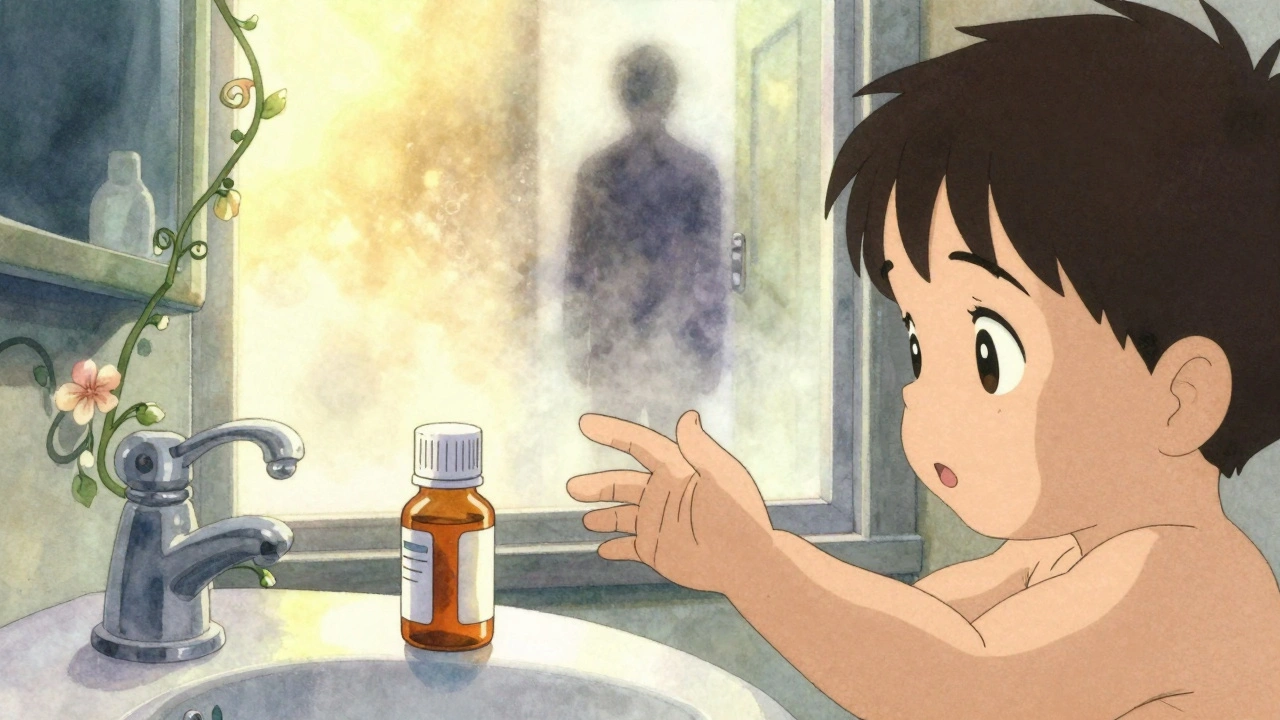
Every year, 60,000 children under five end up in emergency rooms because they got into medicine they weren’t supposed to. That’s not a rare accident-it’s a preventable crisis. And it’s happening in homes where parents think they’re being careful. You leave the pill bottle on the counter for just a minute while you answer the door. You put the cough syrup in the bathroom cabinet because it’s convenient. You trust your child knows not to touch medicine. But kids don’t think like adults. They don’t understand danger. And they’re smarter at getting into things than you think.
Why Child-Resistant Caps Aren’t Enough
You’ve bought the bottles with the tricky caps-the ones you have to push down and twist. You feel safe. But here’s the truth: half of all children under five can open those caps in less than a minute. That’s not a myth. It’s from Express Scripts’ 2023 safety analysis, which tested real kids in real homes. These aren’t outliers. They’re normal toddlers who’ve figured out how to twist, press, and pull. A 2022 study in the Journal of Pediatric Health Care found that 62% of toddlers can open a standard cabinet latch in under 30 seconds. That’s faster than you can say, “Wait, don’t touch that.” Child-resistant packaging was designed to slow kids down, not stop them. It works for a few seconds, maybe a minute. But when a child is determined, curious, or just bored, those caps become a challenge-not a barrier. And if the bottle is sitting on the counter, in a drawer they can reach, or in a purse left on the couch? They’ll find it.Where Not to Store Medications
Bathroom cabinets are the #1 mistake. They’re convenient. They’re cool. They’re where most people keep their medicine. But they’re also at kid height. Kids love bathrooms. They play with the towels, open drawers, climb on the toilet. And those cabinet latches? Most are designed for adult hands, not toddler fingers. A 2023 Safe Kids Worldwide survey found that 41% of parents still store meds in the bathroom-even though 89% of them know kids can get into them. Nightstands and dressers? Big no. Kids climb. They pull things down. A 2022 CDC report documented a case where a 22-month-old accessed opioid pills from an unsecured overnight bag left on a dresser. That’s not a horror story-it’s a real event that happened in a home where everything else was stored safely. Purses, backpacks, and coat pockets? Also dangerous. Grandparents, babysitters, visitors-they bring meds in their bags. And kids explore. A Reddit thread with over 1,200 comments from parents revealed that 63% of near-miss incidents happened during travel, when routines were broken and meds were out of their usual spot.Where to Store Medications-The Right Way
The only reliable method is locked and high. Not just out of sight. Not just on a top shelf. Locked. And above counter height-minimum 36 inches. The CDC’s Up and Away campaign, backed by decades of data, says: lock it up. Not just sometimes. Not just when you’re worried. Always. A locked cabinet is 98% effective at preventing access. A high shelf alone? Only 72%. That’s a massive difference. And it’s not just about the lock-it’s about the location. Store meds in a kitchen cabinet, a bedroom dresser with a childproof latch, or a dedicated medicine safe. Don’t use a drawer that opens easily. Don’t rely on a “high” spot if the child can stand on a chair or pull out a stool. For refrigerated meds like insulin, use a lockable fridge compartment. Don’t leave it on the top shelf where a child can reach it. Even if it’s cold, it’s still poison if swallowed.Medication Safes: Are They Worth It?
Yes. If you have multiple medications, young kids, or a history of near-misses, a dedicated medicine safe is one of the best investments you can make. These aren’t fancy gun safes-they’re small, sturdy boxes made of steel or hardened plastic. Most are 6 x 4 x 2 inches, big enough for a week’s worth of pills, inhalers, or epinephrine pens. Basic models cost $30-$50. Smart safes with biometric locks or Bluetooth alerts run $80-$120. But here’s the catch: biometric locks take 5-8 seconds to open. That’s too slow for emergency meds like an EpiPen. So if you’re storing rescue medications, use a key-lock safe that opens fast. Keep your EpiPen or albuterol inhaler in a clearly labeled, easily accessible locked box-not buried in a drawer. Amazon reviews for Med-Tek lock boxes show 4.3 out of 5 stars from over 1,200 users. Parents report 92% effectiveness. Compare that to the 38% effectiveness of standard kitchen cabinets. The difference isn’t close.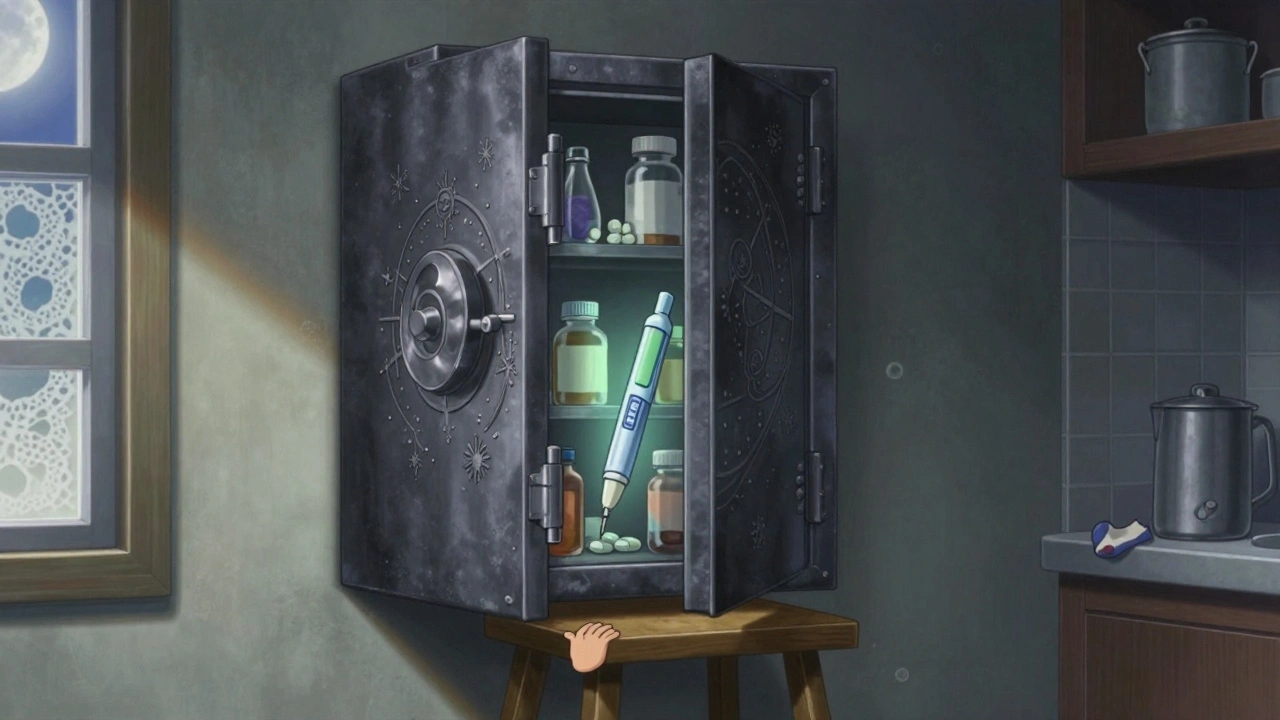
The Two-Minute Rule: Never Leave Meds Unattended
Even the best storage fails if you’re not careful during use. The Up and Away campaign’s “Two-Minute Rule” is simple: never leave medicine out for more than 120 seconds. That’s the average time it takes a child to reach, open, and swallow something dangerous. Think about it: you’re giving your child a liquid antibiotic. You unscrew the cap. You pour. You hand it to them. You set the bottle down to wipe their chin. That’s 30 seconds. Then you go to the sink to rinse the spoon. That’s another 45. You turn around-and your toddler is holding the bottle. Happens all the time. Solution: hold the bottle in one hand, the medicine in the other. Never set it down. If you need to pause, lock it away first. Even if you’re just stepping into the next room.Grandparents, Visitors, and Travel
Most accidental ingestions happen when routines change. Grandparents visit. Kids stay over. You travel. And suddenly, meds are on the nightstand, in a purse, or in a hotel minibar. Express Scripts’ 2024 survey found that 76% of grandparents don’t lock up meds when grandchildren visit. Why? “They know not to touch it.” But kids don’t know. They’re not being bad. They’re being kids. Solution: bring your own lockbox when visiting. Or ask hosts to lock meds away. Travel safety kits from the CDC now include small, portable lockboxes that fit in hotel safes. Use them. Even if you’re only staying one night.What About Teenagers?
Teenagers don’t need childproofing-they need accountability. The National Association of Pediatric Nurse Practitioners recommends a monitored system for teens who take daily meds. Each dose is logged, and an adult verifies it. This cuts prescription misuse by 67%, according to data from 12,000 families. If your teen has ADHD meds, anxiety pills, or painkillers, don’t just hand them the bottle. Use a pill organizer with a lock. Track usage. Talk to them about why misuse is dangerous. This isn’t about control-it’s about safety.
Disposal: Don’t Flush, Don’t Toss
Old meds are still dangerous. A child can find them in the trash. A teen can find them in the bathroom cabinet. The CDC says the safest way to dispose of meds is to mix them with something unappetizing-coffee grounds, kitty litter, dirt-then seal them in a plastic bag before tossing. Never flush unless the label says to. Over 78% of U.S. communities now have permanent drug disposal kiosks at pharmacies. Use them. If you’re not sure where, check your local pharmacy or health department website. It’s free. It’s safe. And it removes temptation.Training and Drills
You wouldn’t skip fire drills in your home. Why skip medicine safety drills? The American Academy of Family Physicians says families who practice “lock-up routines” reduce accidental access by 83%. That means: once a month, go through your meds. Lock them up. Show your partner. Show your babysitter. Practice what you’d do if a child got into something. Make it a habit. Teach your kids early: “Medicine is not candy. Only grown-ups give medicine.” Don’t use candy as a reward with pills. Don’t call medicine “yummy.” That’s how kids get confused. A 2022 study found a 17% spike in ingestions of chewable meds like Tums and aspirin because they look like candy.The Bigger Picture
Every year, pediatric medication poisonings cost the U.S. over $67 billion in medical bills and lost work time. Each ER visit averages over $3,200. That’s not just money-it’s stress, fear, and trauma for families. But it doesn’t have to be this way. The CDC’s projection model shows that if every household locked up their meds, we could prevent 53,700 emergency visits every year. That’s 165 kids a day-saved. It’s not about being perfect. It’s about being consistent. Lock it up. Always. Even when you’re tired. Even when you’re in a hurry. Even when you think no one’s watching. Because kids don’t wait for the perfect moment. They act when you least expect it.Can child-resistant caps really be opened by toddlers?
Yes. According to Express Scripts’ 2023 safety analysis, 50% of children under five can open standard child-resistant caps in under a minute. These caps are designed to slow kids down, not stop them. Toddlers are persistent, curious, and surprisingly strong. They learn quickly how to twist, push, and pull. Never rely on child-resistant packaging alone.
Is it safe to store medicine in the bathroom?
No. Bathroom cabinets are at child height, and kids love exploring bathrooms. Even if the cabinet has a latch, most toddlers can open it in under 30 seconds. Humidity and moisture can also degrade some medications. Store medicine in a dry, locked cabinet in the kitchen, bedroom, or another room out of reach.
What should I do if my child swallows medicine by accident?
Call Poison Control immediately at 1-800-222-1222. Do not wait for symptoms. Do not induce vomiting. Have the medicine bottle ready-note the name, dose, and time ingested. If your child is unconscious, having trouble breathing, or seizing, call 911 right away. Keep the Poison Control number saved in your phone.
Should I lock up over-the-counter meds too?
Yes. Tylenol, ibuprofen, antihistamines, cough syrups, and even vitamins can be dangerous in large doses. Children don’t distinguish between prescription and OTC meds. A single bottle of children’s ibuprofen can cause liver damage. Treat all medications the same way: lock them up, out of reach, and out of sight.
How do I store emergency meds like EpiPens safely but accessibly?
Keep EpiPens and rescue inhalers in a locked box that opens quickly-like a key-lock safe or a magnetic lockbox mounted on the wall near the kitchen or front door. Make sure every caregiver knows where it is and how to open it. Test the lock regularly. Delayed access during an allergic reaction can be life-threatening.
Is it okay to use a pill organizer for daily meds?
Only if it’s locked. A plain pill organizer left on the counter is a magnet for kids. Even if it’s labeled, it looks like candy. Use a lockable pill organizer or store it inside a locked medicine box. Never leave it unattended, even for a few minutes.
What’s the best way to dispose of old or expired meds?
Mix them with coffee grounds, kitty litter, or dirt in a sealed plastic bag, then throw them in the trash. Never flush unless the label says to. Use a drug disposal kiosk at your pharmacy-78% of U.S. communities now offer them for free. This keeps meds out of water supplies and away from curious kids or teens.
How can I teach my young child not to touch medicine?
Say it clearly and often: “Medicine is not candy. Only grown-ups give medicine.” Never use medicine as a reward or call it “yummy.” Use simple language and repeat it during daily routines. Pair it with action-show them the locked box and say, “This is where medicine lives. We don’t open it.” Consistency matters more than age.


