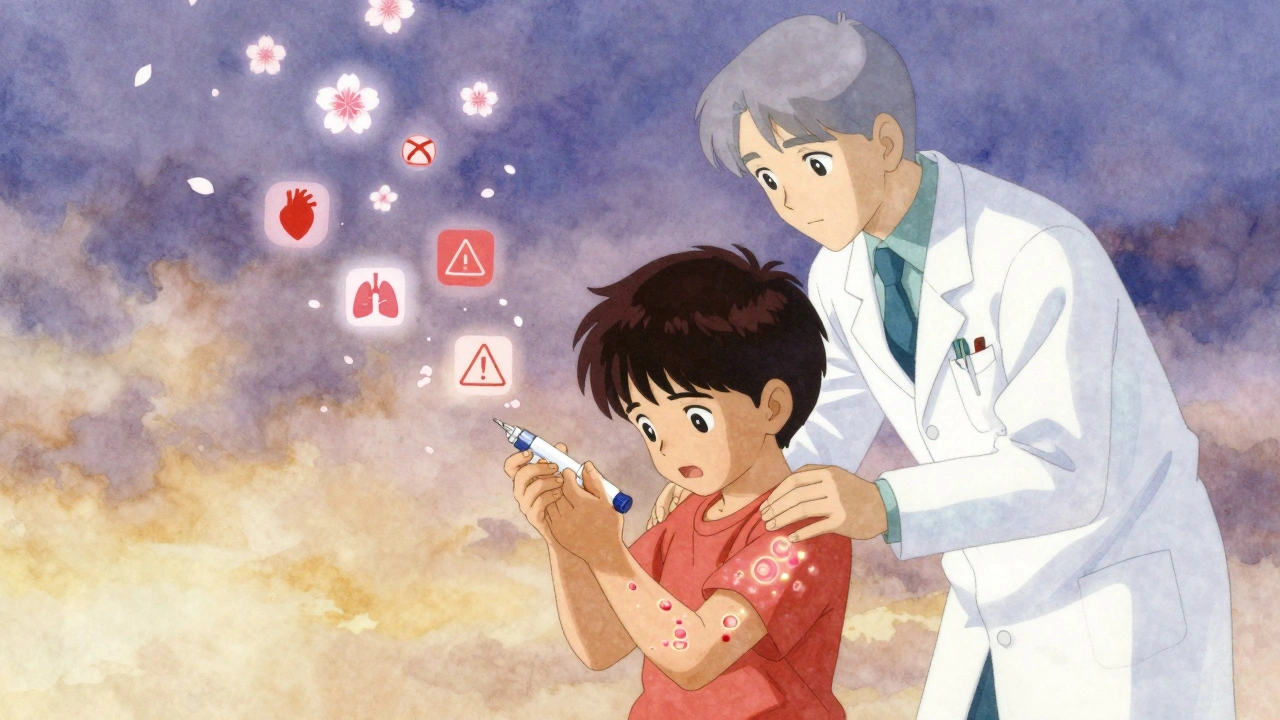
Anaphylaxis Emergency: Signs, Triggers, and What to Do Now
When your body overreacts to something harmless—like peanuts, bee stings, or certain meds—it can trigger a life-threatening response called anaphylaxis, a sudden, severe allergic reaction that affects multiple body systems and requires immediate treatment. Also known as anaphylactic shock, it doesn’t wait for a warning. It hits in minutes, and without quick action, it can stop your breathing or your heart. This isn’t just a rash or a stuffy nose. It’s a full-body crisis that demands a clear plan, not guesswork.
Most anaphylaxis emergencies, life-threatening allergic reactions that require immediate epinephrine and emergency care are caused by foods, insect stings, or medications. The most common triggers? Peanuts, shellfish, eggs, milk, and antibiotics like penicillin. But it can also come from latex, NSAIDs, or even exercise after eating certain foods. If you’ve had a mild reaction before, don’t assume the next one will be too. Anaphylaxis can escalate fast—even if past episodes were minor. And if you’re on chemotherapy, as noted in some of our posts, hypersensitivity reactions can mimic or trigger anaphylaxis during infusions. That’s why knowing your triggers and carrying your epinephrine autoinjector isn’t optional—it’s your best shot at survival.
Here’s what happens when anaphylaxis kicks in: your throat swells, your tongue feels thick, your skin breaks out in hives, your blood pressure drops, and you might feel dizzy, nauseous, or like you’re going to pass out. Some people get a sense of doom—like something terrible is about to happen. That feeling? It’s your body screaming for help. The only thing that stops this cascade is epinephrine, a fast-acting medication that reverses airway swelling and stabilizes blood pressure during anaphylaxis. Antihistamines like Benadryl? They help with itching, but they won’t save your life. Waiting to use epinephrine is the #1 mistake people make. Use it at the first sign of trouble—even if you’re not 100% sure. Then call 911. Even if you feel better after the shot, you still need to go to the ER. A second wave can hit hours later.
People with known allergies often carry epinephrine autoinjectors—like EpiPens or Adrenaclick—but many don’t know how to use them properly, or keep them in a drawer instead of their bag. Others forget to check the expiration date. Some even avoid using it because they’re afraid of the side effects. But the truth? The side effects of epinephrine—like a racing heart or shaking—are temporary. The side effect of not using it? Death. Keep it with you. Teach your family how to use it. Make sure your kids’ teachers know where it is. And if you’ve ever had a reaction, talk to your doctor about getting a prescription and a written emergency plan.
Below, you’ll find real, practical posts that dig into what causes severe allergic reactions, how medications can trigger them, and how to spot the warning signs before it’s too late. From chemo reactions to antibiotic risks, these aren’t theoretical guides—they’re tools built from real patient experiences and medical data. If you or someone you care about has ever had an allergic reaction, this collection could be the difference between panic and preparedness.